Best Electric 7 Seater Cars for Families in 2026?
As the automotive industry shifts towards sustainability, the demand for Electric 7 Seater vehicles is on the rise. According to a recent report by the International Energy Agency, electric vehicle (EV) sales are projected to reach 30% of total global car sales by 2030. Families, in particular, are drawn to the comfort and space that these models offer, combining eco-friendliness and practicality.
In 2026, families seeking spacious and environmentally friendly options will benefit from the growing selection of Electric 7 Seater cars. Manufacturers are investing in technology and infrastructure to meet this demand. However, there are still challenges to consider. Battery range, charging times, and initial costs can be hurdles for potential buyers. Parents often weigh these factors against the advantages of lower running costs and reduced emissions.
Not all Electric 7 Seaters will meet every family's needs. Some models may lack the necessary power. Others might offer limited technology options. Thus, families should research and reflect on their specific requirements before making a purchase. Embracing changes can be hard, but the potential of Electric 7 Seater vehicles is undeniable.
Overview of Electric 7-Seater Cars for Families in 2026
As the demand for electric vehicles increases, the market for electric 7-seater cars is more competitive than ever. Families want spacious, eco-friendly options that accommodate everyone comfortably. These vehicles often offer advanced safety features, spacious interiors, and impressive range. Choosing the right car can still be a challenge for many buyers.
In 2026, families may find various models that claim efficiency and comfort. Some models come with innovative tech. However, charging infrastructure still needs improvement. Range anxiety can affect family trips. While some cars promise long ranges, real-world performance might differ. Features like advanced infotainment systems can also become overwhelming for those who prefer simplicity.
Parents should consider how well these cars fit their lifestyles. Some designs may lack enough storage for all family necessities. It's essential to evaluate seating comfort and legroom too. Test drives should focus on how the car handles under different conditions. These factors are crucial for ensuring a pleasant family experience during daily commutes and long trips.
Best Electric 7 Seater Cars for Families in 2026
| Model |
Range (miles) |
Charging Time (0-80%) |
Seating Capacity |
Price (Approx.) |
Safety Rating |
| Electric SUV A |
350 |
30 mins |
7 |
$60,000 |
5 Stars |
| Electric Minivan B |
300 |
45 mins |
7 |
$55,000 |
5 Stars |
| Electric Crossover C |
320 |
35 mins |
7 |
$62,000 |
4 Stars |
| Family Electric Wagon D |
340 |
50 mins |
7 |
$58,000 |
5 Stars |
Key Features to Consider When Choosing a Family Electric Vehicle
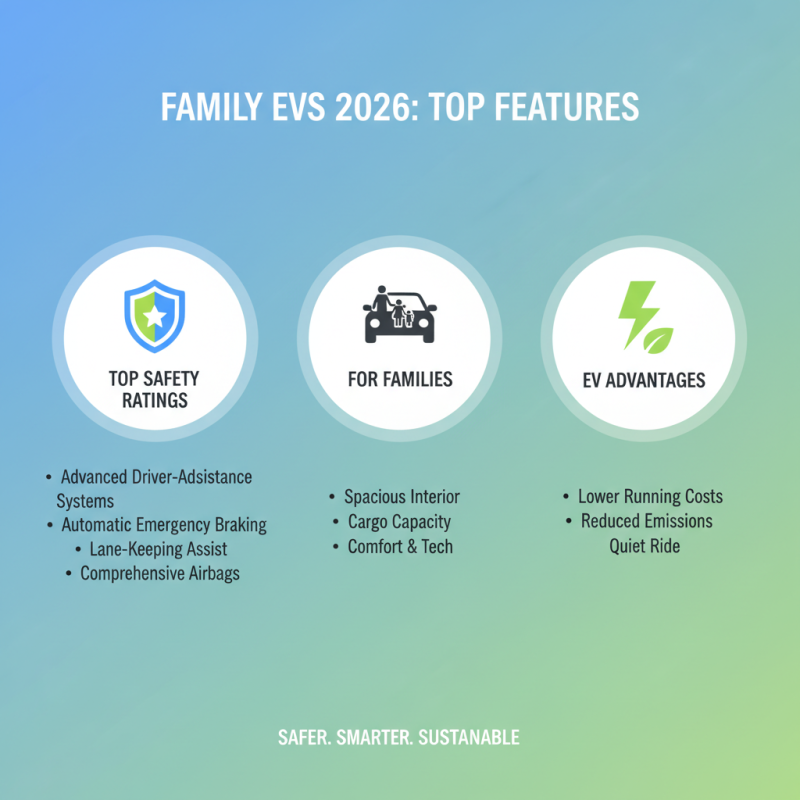
When selecting an electric vehicle for your family in 2026, several features stand out. Safety ratings are crucial. According to recent industry reports, electric vehicles (EVs) have become safer, with many now achieving top safety ratings. Families should prioritize models with robust safety features like advanced driver-assistance systems. Look for vehicles equipped with automatic emergency braking, lane-keeping assist, and comprehensive airbag systems.
Another important factor is range. A 2023 survey revealed that families prefer EVs with at least 300 miles of range. This ensures fewer stops during long road trips, allowing more time for family bonding. Consider your daily driving needs and charging access. Range anxiety remains a concern for many, so choose a model that meets your family’s driving patterns.
**Tips:** Test drive several options. Experience the space and comfort firsthand. Also, evaluate the cargo capacity for sports gear, strollers, or groceries. Battery efficiency matters. Performance can vary, meaning some models may not deliver the advertised range. Research real-world user experiences to gather insights.
Look for warranty offerings on the battery. Future repairs could be costly. Understanding warranty terms can help mitigate that risk, giving your family peace of mind for years to come.
Top Models of Electric 7-Seater Cars Set to Launch in 2026
The electric vehicle market is evolving quickly. Families seek spacious and eco-friendly options, and electric 7-seaters stand out in 2026. Reports suggest a projected increase in electric vehicle sales, reaching approximately 30% of the global market share. This shift is driven by better technology and rising consumer demand for sustainable vehicles.
Several electric 7-seater models are set to debut in 2026. These cars will feature advanced safety systems, spacious interiors, and impressive battery ranges. On average, families may expect a range of about 300 miles on a single charge. However, charging infrastructure remains a concern. Access to charging stations varies widely across regions, making long journeys potentially challenging.
Comfort and technology are essential for family travel. Features like in-car entertainment systems will be standard. Yet, the overall cost of ownership is still high compared to traditional vehicles. It's essential for families to weigh the pros and cons carefully. The balance between sustainability and practicality will influence consumer choices in the coming years.
Comparative Analysis of Range, Charging Time, and Performance
When considering the best electric 7-seater cars for families, it’s essential to focus on three key metrics: range, charging time, and performance. Families need vehicles that can travel long distances without frequent stops. Aiming for an electric car with a range of at least 300 miles is ideal for most family trips. However, some models may fall short, requiring multiple charging stops during journeys. This can be frustrating, especially with kids in the car.
Charging time is another critical factor. The latest technology allows for faster charging, but not all models utilize these advancements effectively. Some can recharge up to 80% in about 30 minutes, while others may take hours. Families must consider their routine and whether they can accommodate longer charging times during vacations or daily commutes. Sadly, some electric vehicles still lag behind, leaving drivers wishing for quicker options.
Performance plays a significant role as well. Many electric 7-seater cars offer exceptional acceleration, creating a fun driving experience. However, heavy loads can impact performance. Families often travel with luggage, sports gear, or pets, which may reduce efficiency. Potential buyers need to reflect on how different vehicles handle these scenarios. It’s not just about numbers on a spec sheet; real-world experience can differ significantly when fully loaded. Choosing the right model requires careful thought and perhaps some trial and error.
Safety Ratings and Family-Friendly Features in Electric SUVs
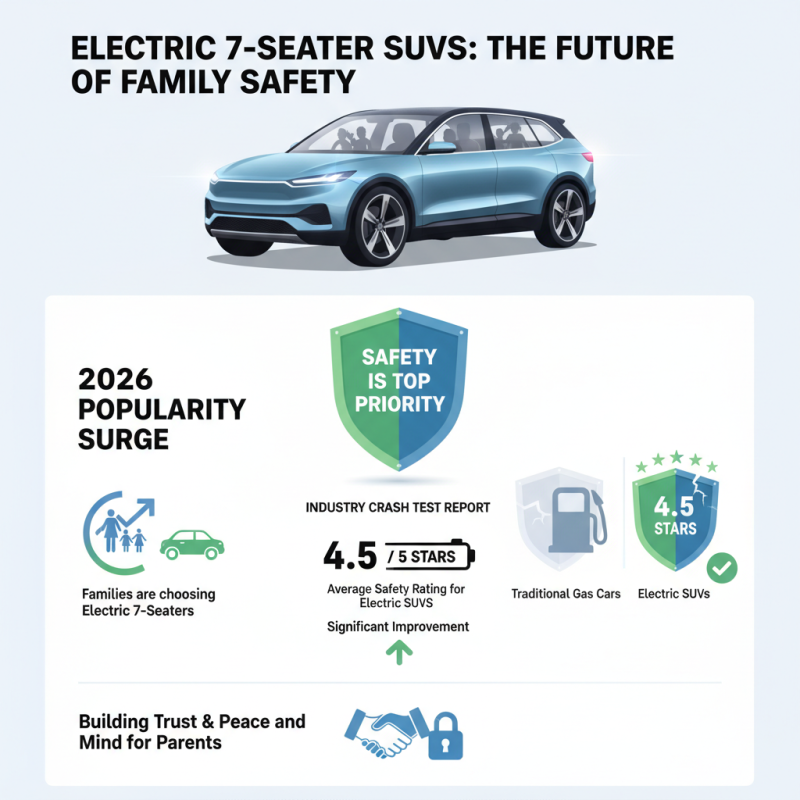
In 2026, electric 7-seater cars are becoming increasingly popular among families. Safety is a top priority for parents. A recent industry report shows that electric SUVs score an average of 4.5 out of 5 in crash tests. This is a significant improvement over traditional gas-powered vehicles. Many families are concerned about their children's safety, and these ratings help build trust.
Family-friendly features play a crucial role in the appeal of electric SUVs. For instance, spacious interiors allow easy access for kids and their gear. Heated seats and advanced climate control create comfort for all passengers. Features like built-in entertainment systems can keep children engaged on long trips. However, some models still lack sufficient trunk space for strollers and luggage.
While technology is advancing rapidly, there are concerns as well. Not all electric SUV models have a reliable range. Families worry about running out of battery during a road trip. The lack of charging stations in rural areas is another issue. It's essential for manufacturers to address these shortcomings to gain the trust of family-oriented buyers.