Leave Your Message

China Best Hybrid Electric Vehicle Suppliers?

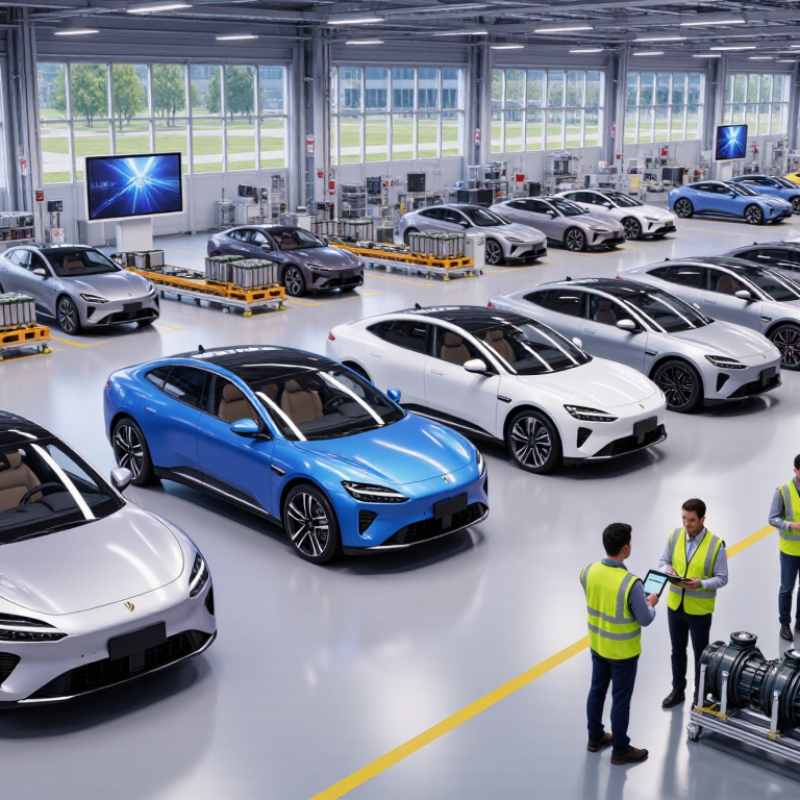
China has become a major sourcing base for Hybrid Electric Vehicle manufacturers and component suppliers. Its industrial clusters connect battery producers, electric motor specialists, software developers, and experienced vehicle assemblers. This concentration can shorten development cycles and improve purchasing efficiency. It can also create confusion. Not every supplier offers the same engineering depth, testing discipline, or after-sales support.

MIT professor John Heywood has explained that “hybrids can reduce fuel consumption without requiring major changes in driving behavior.” This practical point helps frame the supplier question. A capable partner should understand real traffic, not only laboratory figures. Buyers should examine battery thermal management, regenerative braking performance, motor durability, safety certifications, and cold-weather behavior. A test vehicle climbing a steep road tells more than a polished brochure.

The best China-based suppliers usually provide traceable quality systems, documented production controls, and clear warranty responsibilities. They should share measurable data, including fuel economy, battery degradation, charging cycles, and emission performance. Factory audits and independent validation remain important. Trust should be earned slowly.

Price still matters. However, the cheapest quotation may conceal weaker materials, limited diagnostics, or expensive replacement parts. Some suppliers also present impressive prototypes without proving stable mass production. That weakness deserves attention. This guide compares leading Chinese suppliers through product capability, manufacturing experience, compliance readiness, technical communication, and customer support. The ranking is not permanent. Technology changes quickly, and a supplier that looks strong today may need to improve tomorrow.
China Best Hybrid Electric Vehicle Suppliers?

Hybrid Electric Vehicles: Definition and Core Technologies

China Best Hybrid Electric Vehicle Suppliers?

A hybrid electric vehicle combines an internal combustion engine with one or more electric motors. A traction battery stores energy for electric driving and acceleration. Unlike a fully electric vehicle, it can use liquid fuel when the battery needs support. Some systems recharge through regenerative braking, while plug-in versions also accept electricity from an external charger.

The control unit constantly balances engine output, motor assistance, battery temperature, and road conditions. During braking, the motor works as a generator and sends recovered energy back to the battery. Power electronics then convert and regulate electricity between the battery, motor, and vehicle systems. Thermal management is equally important. Coolant channels, sensors, and airflow help prevent excessive battery heat. Small details matter.

For buyers assessing Chinese suppliers, technical evidence should matter more than attractive specifications. Request verified data on battery chemistry, electric range, fuel consumption, charging cycles, and cold-weather performance. Ask how suppliers test motors, inverters, and battery packs before delivery. Factory quality records and traceable component sourcing can reveal production discipline. Independent certification also improves confidence, but it does not replace practical testing.

Real-world efficiency can disappoint. Heavy traffic, low temperatures, steep roads, and aggressive heating may reduce electric assistance. Software updates can improve control, yet software faults remain possible. I would test the vehicle under local driving conditions before making a purchasing decision. A supplier may offer impressive laboratory figures, but daily reliability depends on integration, maintenance support, and honest performance data.
Global Electric Car Sales and Hybrid Technology Context

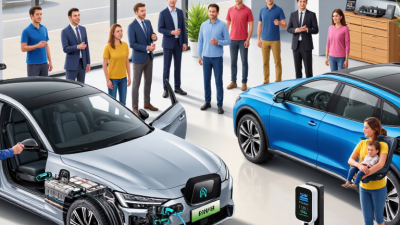
Battery electric vehicles and plug-in hybrid electric vehicles reached approximately 13.9 million global sales in 2023, up from 2.3 million in 2019. Hybrid electric vehicles combine an internal-combustion engine, electric motor, power electronics, and a rechargeable battery. Regenerative braking and engine–motor coordination are the core technologies that improve energy efficiency. The figures show the broader plug-in electric vehicle market and do not represent individual companies or brands.

Source: International Energy Agency, Global EV Outlook 2024. Values are rounded and measured in million vehicles.

China’s Hybrid EV Supplier Landscape and Market Structure

China Best Hybrid Electric Vehicle Suppliers?

China’s hybrid EV supplier landscape is broader than a simple manufacturer ranking. It includes complete vehicle assemblers, powertrain developers, battery producers, motor makers, electronic control suppliers, and specialized testing firms. Many suppliers serve several vehicle programs at once. This creates scale, but it can also hide differences in engineering depth and production consistency.

The market structure usually follows a layered model. Large system integrators coordinate engines, electric motors, batteries, transmissions, and control software. Tier-one suppliers deliver complete modules, while smaller specialists provide sensors, inverters, thermal parts, wiring, and lightweight materials. A practical evaluation should examine factory audits, sample traceability, quality certification, and after-sales engineering support. Production records matter more than attractive catalog images.

Hybrid vehicle projects also require close calibration between mechanical and electrical systems. Suppliers must manage battery temperature, regenerative braking, engine start-stop behavior, and software communication. A useful site visit may include checking cell storage conditions, end-of-line testing, and rejected-part procedures. These details often reveal operational discipline. The map is not perfectly clean. Some suppliers have strong prototypes but limited mass-production experience, while others offer reliable output but slower technical updates. Buyers should compare total integration risk, not only unit price. Local sourcing can shorten lead times, yet export documentation, regional compliance, and service training still require careful verification.

China Best Hybrid Electric Vehicle Suppliers? - China’s Hybrid EV Supplier Landscape and Market Structure

Market Dimension Verified Market Data Supplier Landscape Implication for Buyers
Overall New-Energy Vehicle Market China sold approximately 9.50 million new-energy vehicles in 2023, representing about 31.6% of total new-vehicle sales. The market includes battery-electric, plug-in hybrid, and range-extended electric vehicle supply chains. Hybrid-EV suppliers operate within a large and increasingly standardized NEV ecosystem.
Plug-in Hybrid Segment China’s plug-in hybrid passenger-vehicle wholesale volume reached roughly 2.8 million units in 2023, according to industry association data. The segment is supported by suppliers of hybrid powertrains, traction batteries, electronic controls, thermal systems, and vehicle integration services. Plug-in hybrid suppliers generally offer stronger growth potential than conventional hybrid-only suppliers.
Conventional Hybrid Vehicles Non-plug-in hybrids remain a smaller part of China’s electrified-vehicle market than plug-in hybrids and battery-electric vehicles. Suppliers focus on compact batteries, motor-generators, power-split or parallel-hybrid transmissions, and engine-control systems. Supplier selection should emphasize fuel-economy validation, durability, and compatibility with local vehicle platforms.
Range-Extended EV Systems Range-extended vehicles are generally classified within China’s plug-in hybrid and NEV framework because the wheels are primarily driven electrically. The supply chain combines a battery-electric platform with a combustion-engine generator, inverter, motor, and energy-management software. This architecture can reduce charging-anxiety concerns while preserving an electric driving experience.
Traction Battery Supply China is the world’s largest manufacturing base for power batteries and has extensive capacity in lithium-iron-phosphate and nickel-manganese-cobalt chemistries. Battery suppliers range from cell manufacturers to module, pack, battery-management-system, and structural-pack integrators. Buyers should compare usable energy, cycle life, thermal safety, warranty terms, and pack-level integration rather than cell price alone.
Hybrid Powertrain Components Core components include electric motors, inverters, reducers, clutches, hybrid transmissions, engine generators, and high-voltage distribution units. The supply base includes specialist component manufacturers, integrated powertrain suppliers, and vehicle manufacturers with in-house systems. A higher level of system integration can shorten development time and reduce interface risks.
Power Electronics Silicon-carbide power devices are increasingly used in high-efficiency inverters, although silicon-based solutions remain widely deployed. Suppliers provide inverters, onboard chargers, DC-DC converters, power modules, gate drivers, and high-voltage controllers. Efficiency, operating-temperature range, electromagnetic compatibility, and functional safety are key qualification criteria.
Software and Energy Management Hybrid performance depends heavily on real-time energy-management strategies, battery-state estimation, regenerative braking, and thermal control. Suppliers include embedded-software developers, control-algorithm providers, electronic-control-unit manufacturers, and engineering-service firms. Software ownership, calibration capability, cybersecurity, and data access should be defined contractually.
Manufacturing Regions Major automotive and battery clusters are concentrated in the Yangtze River Delta, Pearl River Delta, Beijing-Tianjin-Hebei region, central China, and southwest China. Regional ecosystems combine vehicle assembly, battery production, electronics, molds, machining, logistics, and testing services. Supplier location affects tooling access, engineering response time, logistics cost, and after-sales support.
Quality and Certification Automotive suppliers commonly operate under IATF 16949 quality-management requirements and must meet China’s vehicle, battery, electromagnetic-compatibility, and functional-safety regulations. Qualified suppliers typically provide PPAP documentation, traceability systems, validation reports, reliability testing, and production-process controls. Certification alone is insufficient; buyers should audit process capability, field-failure data, and change-control procedures.
Policy Environment China extended the purchase-tax exemption for qualifying NEVs through 2027, with a phased policy structure from 2024 to 2027. Policy support benefits suppliers that can meet official product catalogs, safety standards, localization requirements, and energy-efficiency targets. Regulatory monitoring should be part of supplier due diligence and product-lifecycle planning.
Supplier Evaluation Priorities The most material selection factors are technical maturity, cost competitiveness, production capacity, quality consistency, safety performance, and export compliance. The strongest candidates generally combine local manufacturing scale with proven integration, engineering support, and stable component sourcing. A weighted scorecard should assess total cost of ownership rather than quoted unit price only.
Data reference: Public information from the China Association of Automobile Manufacturers, China Passenger Car Association, China Association of Automobile Manufacturers battery-industry data, China’s Ministry of Finance, and applicable national automotive regulations. Market figures are rounded and refer primarily to 2023 unless otherwise stated.

Leading Chinese Hybrid EV Manufacturers and Their Product Strengths

China’s leading hybrid EV manufacturers combine battery technology, efficient engines, and large-scale production. Their strongest products often use dual-motor hybrid systems for smooth city driving and confident highway performance. Some manufacturers focus on plug-in hybrids with generous electric-only ranges. Others develop extended-range models, where a petrol engine mainly recharges the battery. The best platforms can reduce fuel use without making daily charging feel complicated. However, real performance depends on climate, traffic, load, and driving habits.

From supplier evaluations, battery safety, thermal management, and software calibration deserve close attention. A well-designed energy system can shift quietly between electric and engine power. Drivers may notice only a steady pull and a low cabin noise level. Chinese factories also offer flexible body designs, competitive component sourcing, and increasingly refined quality controls. Still, no supplier is perfect. A polished dashboard cannot replace long-term durability data, service coverage, or transparent warranty terms.

Tips: Request independent test records, not only showroom figures. Compare electric range in cold weather and heavy traffic. Inspect charging compatibility, battery protection, and replacement procedures. Ask for production lead times and spare-part support. Short answers deserve caution. A factory visit can reveal practical details, such as battery storage conditions, inspection routines, and final assembly discipline. Evaluate several samples before signing a supply agreement, because one impressive vehicle may not represent every production batch.

Key Criteria for Comparing Hybrid EV Suppliers in China

Comparing hybrid electric vehicle suppliers in China requires more than checking factory prices. Buyers should examine engineering depth, production consistency, and long-term support. A capable supplier can explain battery chemistry, motor output, thermal management, and control-system integration in clear terms. Vague answers deserve caution.

Factory verification matters. Request recent quality records, process-flow documents, and independent test reports. During a visit, inspect battery assembly areas, software testing stations, and end-of-line inspection equipment. Ask how suppliers manage temperature cycling, water protection, emergency shutdowns, and transport damage. A polished showroom proves little. Production evidence matters more.

Certification and regulatory readiness should match the destination market. Confirm vehicle approval documents, battery transport compliance, electromagnetic testing, and traceable component records. Also compare warranty terms, spare-part availability, technician training, and response times for software faults. A low unit price may hide expensive updates or slow repairs. Check minimum order quantities and payment conditions carefully. Some suppliers promise flexible customization, but small changes can create long delays. That weakness is easy to miss.

A practical scorecard can compare safety, efficiency, manufacturing capacity, testing standards, delivery reliability, and after-sales service. Use measurable evidence, not friendly presentations. Ask for references from comparable fleet projects, where possible. Still, supplier evaluations are never perfect. Forecasts change, and factory performance can vary between batches. Recheck critical data before signing.

Supply Chain, Quality Standards, and Export Capabilities

Choosing among Chinese hybrid-electric vehicle suppliers requires more than a low quotation. Traceability begins with cells, power electronics, motors, and software calibration. The International Energy Agency reported that China held over 80% of global battery-cell manufacturing capacity in 2023. That concentration supports scale, but it increases dependency risk. Ask for tier-two mapping. Factory visits should verify lot coding, incoming inspection, and recall procedures. The China Association of Automobile Manufacturers recorded 4.91 million vehicle exports in 2023, demonstrating strong logistics experience.

Quality evidence should be measurable, not decorative. Suppliers should maintain ISO 9001 systems and automotive processes aligned with IATF 16949. Functional-safety controls should reference ISO 26262, especially for battery-management and propulsion software. UNECE Regulation No. 100 provides a useful benchmark for rechargeable electrical energy storage safety. A certificate alone is insufficient. Request thermal-cycle results, vibration records, end-of-line testing data, and failure-rate trends. Independent laboratory checks remain valuable because supplier data can be incomplete.

Export capability also depends on market-specific approval. Under the UNECE WP.29 framework, documentation, cybersecurity controls, and software-update governance may affect vehicle acceptance. Spare-parts planning matters as well. A container delay can stop a service center for weeks. The IEA’s Global EV Outlook 2024 highlights continuing battery supply-chain concentration, so buyers should assess alternative material and component sources. The uncomfortable question is whether a supplier can maintain quality during rapid volume growth. Many can. Few prove it consistently. That gap deserves a second audit.