Why Choose Auto Electric Vehicles for Sustainable Transportation?
As the world faces pressing environmental challenges, the adoption of Auto Electric Vehicles (AEVs) emerges as a key strategy for sustainable transportation. According to the International Energy Agency (IEA), the global electric vehicle stock reached over 10 million in 2020, showcasing a remarkable 43% increase from the previous year. This shift is driven by a collective understanding of the urgent need to reduce carbon emissions and combat climate change. Traditional gas-powered vehicles contribute approximately 15% of global CO2 emissions, highlighting the necessity for cleaner alternatives.
AEVs not only promise reduced greenhouse gas emissions but also offer operational efficiency. The U.S. Department of Energy states that electric vehicles convert over 59% of electrical energy from the grid into power at the wheels. This stands in stark contrast to conventional gasoline vehicles, which only convert about 17% of the energy stored in gasoline. However, the transition to AEVs isn’t without its challenges. Limited charging infrastructure and range anxiety continue to deter potential consumers. Thus, while the benefits are clear, addressing these barriers is crucial for the widespread adoption of Auto Electric Vehicles. The pathway to sustainable transportation requires ongoing commitment and innovation within the industry.

Benefits of Auto Electric Vehicles in Reducing Greenhouse Gas Emissions
The rise of auto electric vehicles (EVs) presents a tangible way to reduce greenhouse gas emissions. These cars use electricity instead of gasoline, significantly cutting pollution levels. For example, an electric car produces no tailpipe emissions. This shift can lead to cleaner air in urban areas, benefiting health and the environment.
Switching to electric vehicles also helps decrease our reliance on fossil fuels. According to studies, transportation contributes a large portion of greenhouse gas emissions globally. By adopting EVs, we can greatly reduce this impact. However, challenges remain. The production of batteries has its own carbon footprint, and sourcing materials can be problematic.
Infrastructure is another area that needs improvement. Charging stations are crucial for wider adoption, yet many regions lack adequate facilities. Public perception also plays a role. Some people worry about battery range and charging times. Addressing these concerns is essential for fostering trust in electric vehicles and their role in sustainable transportation.
Comparative Analysis of Auto Electric Vehicles vs. Traditional Combustion Engines
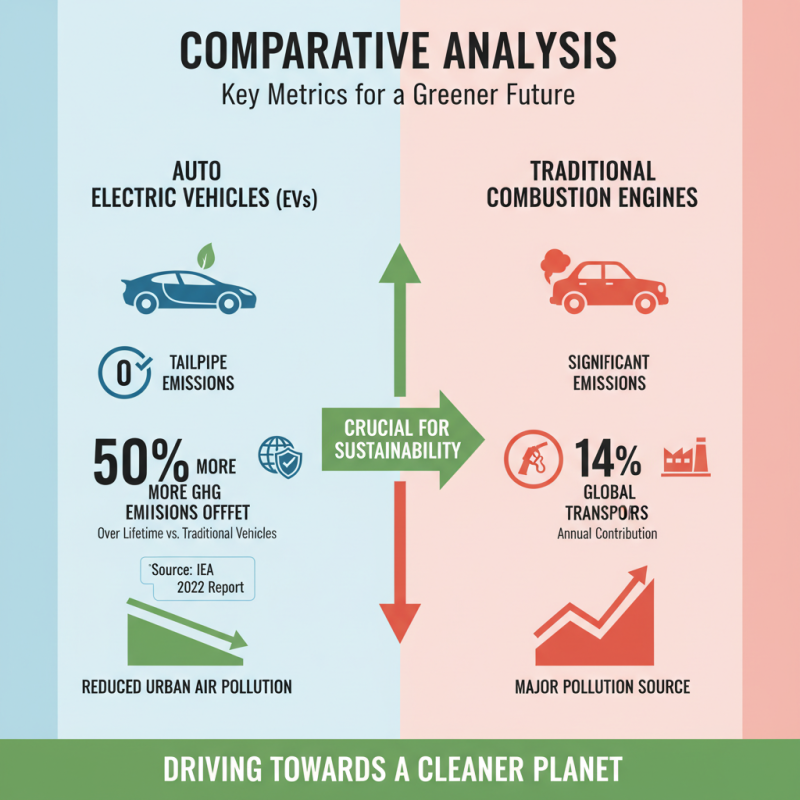
The transition from traditional combustion engines to auto electric vehicles (EVs) is crucial for sustainable transportation. According to a 2022 report by the International Energy Agency, electric cars offset approximately 50% more greenhouse gas emissions compared to traditional vehicles over their lifetime. This significant difference stems from the zero tailpipe emissions of EVs, which directly reduces urban air pollution. It’s noteworthy that conventional internal combustion engines contribute around 14% of global emissions in the transportation sector.
However, the manufacturing process of EV batteries can be resource-intensive. The mining of lithium and cobalt raises ethical and environmental concerns. Moreover, the charging infrastructure is still developing, creating challenges for wider adoption. A recent survey indicated that 60% of potential EV buyers cite charging availability as their primary concern. These issues highlight the complexity of this transition and the need for continued innovation in battery technology and recycling methods.
Tip: When considering an EV, research local charging options. Investigate state incentives that may ease the transition. Understanding the full picture helps make informed decisions. The benefits of EVs go beyond the vehicle itself; they require a shift in lifestyle and infrastructure.
Economic Impact of Auto Electric Vehicles on the Global Automotive Market
The rise of electric vehicles (EVs) is reshaping the global automotive market. This shift creates new economic opportunities, but it also presents challenges. The demand for EVs leads to job creation in manufacturing. Skilled labor is essential in this sector. However, the transition requires training programs for current workers. Some may face job displacement if they do not adapt.
Investment in EV technology impacts supply chains. Raw materials for batteries are becoming crucial. Countries rich in lithium and cobalt may see economic growth. Yet, this can lead to geopolitical tensions. Ensuring ethical sourcing remains a complex challenge. Additionally, charging infrastructure must expand to support a growing EV fleet.
Consumer behavior also influences the market. Many drivers are still hesitant about fully converting to EVs. Concerns about range and charging access persist. Education on benefits and advancements can help alleviate these worries. On the other hand, incentives from governments can motivate more consumers to consider electric options. The landscape is evolving, and stakeholders need to navigate it carefully.
Technological Innovations Driving the Adoption of Auto Electric Vehicles
The rise of auto electric vehicles (EVs) is reshaping transportation sustainability. Technological innovations play a crucial role in this transformation. According to a report by the International Energy Agency (IEA), global electric vehicle sales reached 6.6 million in 2021, a 108% increase from 2020. This growth indicates a significant shift in consumer preferences towards sustainable options.
Battery technology advancements have dramatically impacted EV adoption. New lithium-ion batteries increase range and reduce charging time. Some models now boast over 300 miles of range on a single charge. This innovation directly addresses consumers' concerns about battery life and convenience. However, challenges remain, such as the environmental impact of battery production. This area requires ongoing research and sustainable practices.
Tips: Consider charging solutions at home to ease the transition to electric driving. Also, look for local incentives that can make adopting an EV more financially viable. Awareness of these elements is essential for potential EV owners. The journey towards sustainable transportation is ongoing, and more insights will emerge as the technology evolves. Responsible practices must guide this evolution to ensure a truly sustainable future.
Why Choose Auto Electric Vehicles for Sustainable Transportation? - Technological Innovations Driving the Adoption of Auto Electric Vehicles
| Dimension |
Description |
Impact on Sustainability |
Technological Innovation |
| Battery Technology |
Advancements in lithium-ion battery efficiency |
Reduces battery disposal issues and enhances vehicle range |
Solid-state batteries |
| Charging Infrastructure |
Expansion of public and home charging stations |
Promotes EV adoption by reducing range anxiety |
Rapid charging technology |
| Autonomous Driving |
Integration of AI for self-driving capabilities |
Improves traffic flow and reduces emissions |
Machine learning algorithms |
| Renewable Energy Use |
Charging EVs with solar and wind energy |
Minimizes reliance on fossil fuels |
Smart grid technology |
| Vehicle-to-Grid (V2G) |
Integration of EVs with power grids |
Enhances energy efficiency and grid stability |
Bi-directional charging systems |
Government Policies and Incentives for Promoting Auto Electric Vehicle Use
Government policies play a crucial role in promoting auto electric vehicles (EVs). Incentives such as tax credits, rebates, and grants encourage consumers to choose EVs over traditional options. These financial benefits lower the entry barrier for buyers. In some regions, governments also invest in charging infrastructure. This makes it easier for EV owners to find charging stations. Accessibility is key in influencing consumer behavior.
However, challenges remain. Some policies may not cover all EV types equally. This can lead to confusion among potential buyers. Furthermore, not all regions have the same level of support. A lack of uniformity can create disparities in adoption rates. Factoring in local infrastructure is essential when evaluating the effectiveness of these policies.
Public awareness is another important element. Many consumers are still unaware of available incentives. This highlights the need for better communication from authorities. Making information readily available can shift public perception. As governments continue to refine their policies, ongoing assessment is vital. Evaluating what works and what doesn’t is necessary for meaningful change.
Electric Vehicle Adoption Rates by Year
This chart displays the increasing adoption rates of electric vehicles from 2015 to 2023. As government policies and incentives have expanded, more consumers are opting for electric vehicles, contributing to sustainable transportation efforts.