Leave Your Message

How to Choose Electric Hybrid Cars for Global Buyers?

Choosing Electric Hybrid Cars for global buyers requires more than comparing fuel economy figures. A quiet test drive can reveal a stiff seat, weak visibility, or confusing controls. These details matter during long commutes and crowded school runs. Hybrid technology combines an electric motor with a combustion engine, but systems differ widely. Some recharge through braking, while plug-in models also depend on home or public charging. Buyers should match the powertrain to daily routes, climate, and electricity access. A mountain village and a dense city demand different compromises. There is no universal best choice.

Reliable research begins with verified specifications, independent safety assessments, and transparent warranty terms. Check battery coverage, service intervals, replacement costs, and roadside assistance before signing anything. Local dealer training is equally important, especially where high-voltage repairs require specialist equipment. Ask how the vehicle behaves in heat, cold, heavy rain, and long climbs. A short showroom drive may hide real-world limitations. Fuel savings can also disappoint when journeys are mostly highway miles or charging is expensive. Published figures are useful, not guaranteed. Compare several sources, then record your expected monthly distance and energy prices.

Global buyers should also examine cabin space, luggage capacity, child-seat access, software language, and available connectivity. Imported vehicles may lack compatible charging plugs, navigation services, or familiar maintenance support. Regional emissions rules and registration requirements can change, so confirm current guidance with official local agencies. An experienced mechanic or trusted automotive specialist can challenge optimistic sales claims. Still, expert advice is not infallible. Battery degradation, resale value, and future infrastructure remain uncertain. Choose a model that fits present needs without assuming tomorrow will be perfect. Careful judgment beats fashionable technology.
How to Choose Electric Hybrid Cars for Global Buyers?

Understanding Electric Hybrid Car Types and Global Market Differences

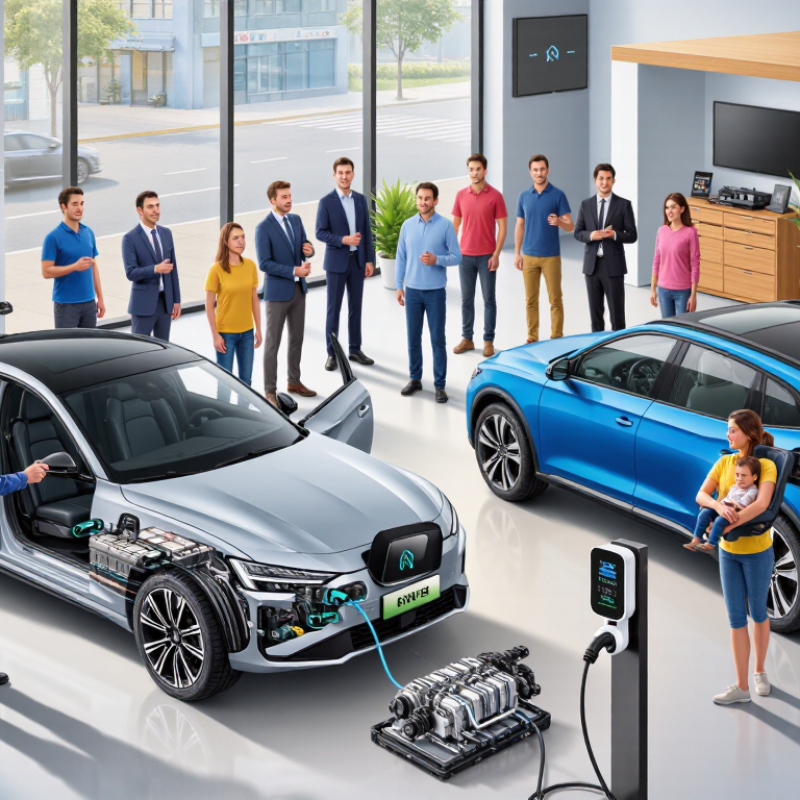
Choosing an electric hybrid car begins with understanding its powertrain. A mild hybrid supports the engine with a small battery. It cannot usually drive far on electricity alone. A full hybrid can move quietly through traffic using electric power, then recharge through braking and engine operation. A plug-in hybrid has a larger battery and needs regular charging. Its electric range varies with temperature, speed, and load.

Market conditions change the best choice. In cities with reliable public chargers, a plug-in model may reduce fuel use during daily commuting. A home charger matters more than many buyers expect. In apartment areas, charging access can be limited. Full hybrids may suit drivers who travel long distances without dependable charging stops. Mild hybrids often fit buyers seeking lower complexity and familiar refueling habits. Local electricity prices, fuel costs, import rules, road quality, and repair support also affect ownership value.

Test the car in realistic conditions. Try a steep road, crowded streets, and a cold morning if possible. Check rear-seat space, luggage capacity, charging cables, and battery warranty terms. I once focused too heavily on electric range and overlooked charging time. That was a costly assumption. Published figures are useful, but real results can differ. Compare official specifications with independent reviews and local owner experiences before deciding.
How to Choose Electric Hybrid Cars for Global Buyers?

Understanding Electric Hybrid Car Types and Global Market Differences

In 2023, China represented the largest market for plug-in vehicles, followed by Europe and the United States. These figures include battery-electric vehicles and plug-in hybrid vehicles, but exclude conventional hybrids that cannot be charged externally. Buyers should compare charging access, driving distance, fuel availability, incentives, and local vehicle regulations before choosing between a conventional hybrid, plug-in hybrid, range-extender hybrid, or battery-electric car.

Source: International Energy Agency, Global EV Outlook 2024. Regional figures are rounded estimates in millions of new plug-in vehicles sold in 2023.

Assessing Driving Needs, Climate, and Charging Infrastructure

Choosing an electric hybrid car starts with the daily route, not the dashboard. Separate conventional hybrids from plug-in hybrids. A conventional hybrid charges through braking and the engine, while a plug-in model needs external electricity for its larger battery. The International Energy Agency reported more than 4 million public charging points worldwide at the end of 2023, with installations rising by over 40% that year. Availability still varies sharply between cities and rural areas.

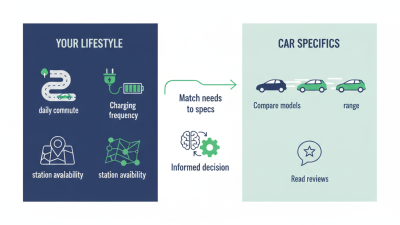
Measure your routine honestly. A driver covering 30 kilometers daily may use electric power efficiently with home charging. A long-distance commuter may value a larger fuel tank and rapid charging access. Check charging times, connector compatibility, apartment parking rules, and electricity prices before buying. Small details matter. A cable across a wet footpath is not a sensible plan.

Climate changes the calculation. Cold mornings can reduce battery output, increase cabin-heating demand, and shorten electric driving range. Hot climates also require energy for cooling and battery temperature control. Park under cover when possible, pre-condition the cabin while connected, and inspect battery warranties carefully. The U.S. Department of Energy notes that cold weather can reduce vehicle fuel economy significantly, although the exact effect depends on speed, temperature, tires, and heating use. That estimate is not universal.

Infrastructure reports can look reassuring. Your neighborhood may still disagree. Use route-planning tools, visit nearby chargers at different times, and confirm their operating reliability. Buyers should also compare real-world consumption in their climate, because laboratory figures remain useful but imperfect.

Comparing Fuel Economy, Electric Range, and Total Ownership Costs

How to Choose Electric Hybrid Cars for Global Buyers?

Fuel economy should be measured in real traffic, not only laboratory figures. A practical test includes commuting, highway driving, steep roads, and heavy air-conditioning use. Hybrid efficiency often improves in city traffic, where regenerative braking recovers energy. Highway speeds can reduce the advantage. In cold climates, cabin heating may also increase fuel consumption. Compare fuel use in liters per 100 kilometers or miles per gallon, depending on your market.

Electric range needs a local reality check. A displayed range is only an estimate. Battery age, temperature, road elevation, and driving style can change it noticeably. Buyers should examine charging access at home, work, and common travel stops. Public charging prices vary across countries and networks. A smaller battery may suit urban drivers with reliable overnight charging. A larger battery may be worthwhile for long rural trips, but it adds weight and purchase cost. Range anxiety is real.

Total ownership costs reveal the better choice. Add the purchase price, financing, insurance, taxes, charging, fuel, servicing, tires, and expected resale value. Battery warranty terms deserve careful reading. So do local repair options and replacement-part availability. My first cost estimate is often too optimistic. Unexpected charging fees and winter fuel use can alter the result. A simple spreadsheet using annual distance and local prices provides a clearer comparison than showroom claims. Keep a margin for price changes.

Checking Safety Standards, Warranty Coverage, and Local Regulations

For global buyers, safety certification should come before fuel economy or touchscreen features. The International Energy Agency reported over 14 million electric car sales worldwide in 2023, increasing the need for consistent testing. Check whether the vehicle meets UNECE regulations, Federal Motor Vehicle Safety Standards, or equivalent national requirements. Euro NCAP’s 2023 protocol assesses crash protection, child safety, vulnerable road users, and driver assistance. Do not rely on a five-star rating alone. Review the exact model year and available safety equipment.

Warranty terms deserve careful reading. Battery coverage may include a time limit, mileage limit, or minimum capacity threshold. Some policies exclude damage caused by flooding, unauthorized repairs, or unsuitable charging equipment. Ask for written details covering the battery, electric motor, inverter, cooling system, and roadside assistance. The Global EV Outlook 2024 notes that battery prices continued falling, but replacement costs can still be significant for owners.

A local service center matters. Distance matters too.

Regulations can change after purchase. Confirm import duties, vehicle registration, charging-plug compatibility, insurance requirements, and battery recycling rules before paying a deposit. A used hybrid may meet its original market’s standards but fail another country’s inspection process. I once treated a translated warranty as sufficient; it was not. The exclusions were buried in a separate document. Keep copies of certification papers and service records. Mistakes happen. Check them early.

Selecting a Reliable Model Based on Availability and Long-Term Support

Choosing an electric hybrid car globally requires more than comparing fuel economy. Check whether the model is officially sold in your country, not merely imported by independent dealers. The International Energy Agency reported almost 14 million electric cars sold worldwide in 2023, yet China, Europe, and the United States represented nearly 95% of sales. Support can therefore become uneven outside major markets. A familiar model may still lack local battery technicians, diagnostic tools, or replacement parts.

Study the service network before trusting a low price. Ask how many certified repair centers operate within a practical driving distance. Confirm battery coverage, hybrid-system warranty terms, software support, and parts availability in writing. A long warranty sounds reassuring, but it may exclude labor, capacity loss, or imported components. That detail matters. The European Automobile Manufacturers’ Association has repeatedly highlighted differences in charging and automotive infrastructure across European markets; conditions are even more varied globally. Resale value is also uncertain, especially where buyers distrust older battery systems. I would not treat online reviews as final evidence. They often reflect one climate, one driving pattern, and one repair experience.

Tips: Request a three-year parts-availability statement from the seller. Test the car in traffic, on hills, and during cold starts. Compare local electricity and fuel prices. Check independent repair feedback. Keep a small reserve for unexpected sensor or battery-cooling repairs. If service promises remain vague, choose the model with fewer unanswered questions, even if its purchase price is slightly higher.

How to Choose Electric Hybrid Cars for Global Buyers? — Selecting a Reliable Model Based on Availability and Long-Term Support
Vehicle Profile Typical Real-World Characteristics Best-Fit Driving Pattern Regional Availability Charging and Fuel Requirements Long-Term Support Check Overall Suitability
Compact Battery-Electric Car Typical battery capacity: 35–60 kWh.
Typical WLTP-rated range: approximately 250–420 km.
Usually offers lower purchase, tire, and energy costs than larger electric vehicles.
Urban commuting, short regional trips, and households with access to home or workplace charging. High in developed electric-vehicle markets; moderate in markets with limited public charging and fewer service centers. Primarily dependent on AC charging. A home wallbox commonly operates at 3.6–7.4 kW, while DC fast charging is generally slower than on larger vehicles. Confirm battery coverage of about 8 years or 160,000 km, availability of replacement battery modules, software-update policy, and local access to diagnostic equipment. Strong choice for city-focused buyers and predictable daily mileage.
Midsize Battery-Electric Car Typical battery capacity: 60–90 kWh.
Typical WLTP-rated range: approximately 350–550 km.
Provides a practical balance between passenger space, efficiency, highway performance, and range.
Mixed urban and highway driving, family use, and regular intercity travel. High in Europe, China, North America, and several developed Asian-Pacific markets; moderate elsewhere. Commonly supports AC charging at 7.4–11 kW and DC fast charging around 100–250 kW, depending on vehicle specification and local grid capacity. Check the number of authorized service locations, high-voltage technician coverage, parts logistics, charging-system compatibility, and the manufacturer’s end-of-life battery process. The most balanced option for many global buyers.
Large Battery-Electric SUV or Sedan Typical battery capacity: 80–120 kWh.
Typical WLTP-rated range: approximately 450–650 km.
Offers more interior space and payload capacity but generally consumes more energy and costs more to repair.
Long-distance travel, large households, frequent highway use, or higher cargo requirements. Moderate to high in major EV markets; limited in countries with import restrictions, weak charging networks, or small parts inventories. Fast-charging capability can be strong, but charging costs and waiting time may increase because of the larger battery. Home charging is highly recommended. Verify warranty transferability, suspension and battery repair costs, availability of body and electronic parts, towing capability, and service coverage outside major cities. Suitable when space and highway range outweigh ownership cost.
Plug-In Hybrid Electric Car Typical battery capacity: 10–25 kWh.
Typical certified electric range: approximately 40–100 km, depending on test cycle and vehicle size.
Combines an electric drive system with an internal-combustion engine.
Buyers who can charge frequently but still need unrestricted long-distance travel in areas with limited public charging. High in markets with established hybrid supply chains and fuel infrastructure; model selection can be narrow in some countries. Requires regular charging to achieve its efficiency benefit. Long trips can continue using fuel, but maintenance is more complex because two propulsion systems are combined. Check separate coverage for the traction battery, engine, transmission, exhaust system, and charging hardware. Confirm that local technicians can service both high-voltage and conventional systems. Practical transition technology where charging access is inconsistent.
Self-Charging Hybrid Electric Car Small battery, generally charged by regenerative braking and the combustion engine rather than an external plug.
Electric-only operation is normally limited and brief.
Urban traffic, frequent stop-and-go driving, and buyers who cannot install a charging point. High in many regions because it uses conventional fuel infrastructure and does not require public charging access. Refueling is similar to a conventional vehicle. It does not provide the same zero-tailpipe-emission driving capability as a battery-electric vehicle. Confirm battery replacement cost, hybrid-system diagnostic capability, availability of specialized technicians, and the expected service life of the power electronics. Reliable access solution when external charging is unavailable.
Hydrogen Fuel-Cell Electric Vehicle Electric drive with onboard hydrogen storage.
Refueling can be rapid, but vehicle and station availability remain geographically concentrated.
Fleet operations, defined routes, and regions with established hydrogen production and refueling networks. Limited globally and concentrated in selected metropolitan areas and commercial corridors. Requires access to compatible hydrogen stations. Total operating cost depends heavily on local hydrogen price and station utilization. Confirm hydrogen-station continuity, high-pressure tank inspection rules, trained technicians, parts availability, and whether support will continue after the initial warranty period. Consider mainly when local hydrogen infrastructure is already dependable.
Used Electric or Hybrid Vehicle Purchase price may be lower, but battery age, charging history, accident history, and software support can vary considerably. Budget-conscious buyers with access to an independent inspection service and a reliable charging or refueling routine. Often high, especially in mature markets with established used-vehicle channels. Confirm real battery state of health, maximum charging speed, cable availability, connector compatibility, and expected cold- or hot-weather range. Obtain a battery health report, verify remaining warranty, inspect recalls and service records, confirm ownership of connected services, and check availability of replacement parts. Good value only when technical condition and support history are documented.
Import or Grey-Market Vehicle May offer attractive specifications or pricing but can differ from local versions in charging standards, safety certification, software, navigation, and parts configuration. Experienced buyers who can verify regulatory compliance and accept potentially limited official support. Variable; official service and warranty support may not apply in the destination country. Confirm connector type, onboard charger compatibility, voltage requirements, language settings, charging-network access, and availability of replacement charging equipment. Obtain written confirmation of warranty validity, software-update access, accident repair support, spare-parts supply, and data-privacy compliance before purchase. Higher risk unless local support is independently verified.

Buyer decision rule: Choose the vehicle category that matches local charging or fueling access first, then compare battery warranty, service-center coverage, parts availability, software support, and expected ownership costs.

Important data note: Range figures are typical market ranges based on published test-cycle specifications; real-world range can be lower because of temperature, speed, payload, terrain, tire selection, and air-conditioning use. Availability and warranty terms vary by country and model year.

Reference framework: International Energy Agency, Global EV Outlook 2024; United Nations Economic Commission for Europe, vehicle regulations and global technical requirements.