How to Choose the Right Electric Truck for Your Business Needs
The shift towards electric vehicles is transforming various industries, including logistics and transport. Electric trucks are becoming increasingly popular due to growing environmental concerns and operational costs. In 2023, the electric truck market is projected to reach $27 billion, a significant increase from previous years. Many businesses now see electric trucks as a viable option to reduce their carbon footprint.
Yet, selecting the right electric truck isn't straightforward. Each company's needs vary widely, from payload capacity to charging infrastructure. Understanding these requirements is crucial. For example, a company might need a truck that can handle long distances or heavy loads, while another may prioritize operational efficiency within urban environments. The complexity of options available can be overwhelming at times.
Moreover, the industry faces challenges, such as limited range and charging station availability. It is vital to evaluate the local infrastructure. Ignoring these factors could lead to operational inefficiencies. Many companies find it difficult to adapt to this new technology. Thus, taking the time to choose the right electric truck can ultimately make a significant difference in the long run.

Understanding Your Business Requirements for Electric Trucks
Choosing the right electric truck begins with understanding your business requirements. Assess the specific tasks that these trucks will perform. For example, consider the weight capacity you'll need. Will you be transporting heavy loads or only lighter products? This decision impacts the truck's size and power requirements.
Next, think about your operational environment. Will these trucks operate in urban areas or on rough terrains? An urban setting may require a compact model for tight spaces. Conversely, rugged terrain demands durability and off-road capabilities. Additionally, calculate your daily distance needs. Some vehicles may need more frequent charging based on longer routes.
Finally, budget considerations cannot be overlooked. Electric trucks typically require a higher upfront investment. Reflect on the long-term savings on fuel and maintenance. It can be a tough balance between initial costs and overall efficiency. Always weigh your business’s unique needs against market offerings, even when options seem limited.
Assessing Different Types of Electric Trucks Available in the Market
When selecting an electric truck, businesses must understand various types available in the market. Consider the payload capacity. Some trucks are designed for heavy loads, while others are more suited for lighter tasks. This assessment directly influences operating costs and efficiency.
Tips: Focus on your business's unique requirements. Are you transporting goods within a city? A smaller model may suffice. Conversely, if you cover long distances, pay attention to battery range. Extended range options could save time and increase productivity.
Another aspect to think about is charging infrastructure. Not all electric trucks come with the same charging capabilities. Some might take hours to recharge, while others offer fast-charging options. Researchers indicate that strategic planning for charging can benefit daily operations significantly. Reflect on existing facilities. Would they support your choice?
Ultimately, it's vital to examine maintenance needs too. Electric trucks may require different maintenance than traditional models. This can impact your long-term budget. More reliable vehicles can result in fewer breakdowns, but initial costs can be higher. Be aware of possible hidden expenses.
Electric Trucks Market Comparison
Evaluating Key Features and Specifications for Your Chosen Model
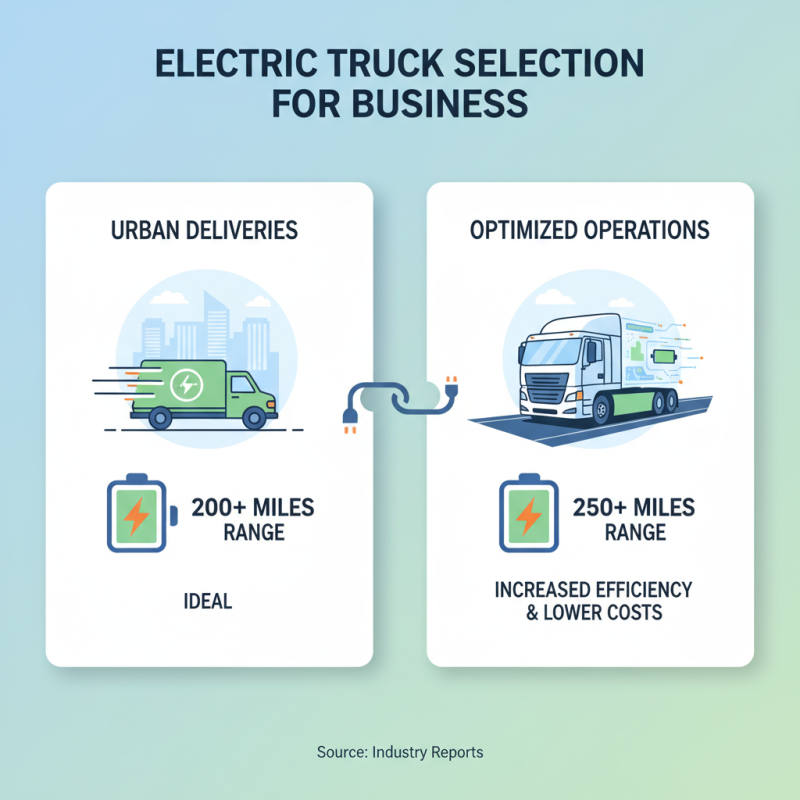
Choosing the right electric truck for your business involves evaluating key features. Range is crucial. A truck that can cover 200 miles on a single charge is often ideal for urban deliveries. According to industry reports, companies that incorporate trucks with a range exceeding 250 miles see an increase in efficiency and lower operational costs.
Payload capacity is another important aspect. Many electric trucks offer varying capacities, typically ranging from 4,000 to 10,000 pounds. Selecting a model that matches your payload needs can avoid frequent trips and downtime. Moreover, consider the charging time. A model that recharges in under four hours can provide significant operational flexibility.
Be aware of potential trade-offs. While electric trucks may offer lower fuel costs, they often come with higher purchase prices. Maintenance costs can be lower, but battery replacement is a significant factor. Warranty options also differ, and understanding these can inform your choice. In evaluating specifications, don’t overlook customer service and support. These can be just as important as the vehicle's performance.
Considering Total Cost of Ownership and Financing Options
When considering an electric truck for your business, the total cost of ownership is crucial. This includes not just the purchase price, but also maintenance, charging infrastructure, and potential tax incentives. Electric trucks often have lower maintenance costs, which can be a significant saving over time. However, many businesses underestimate the installation costs of charging stations. These can add considerably to your initial investment.
Financing options should also be evaluated carefully. Many financing plans exist, but not all are suitable for every business. Do you want a lease or a loan? Each option has its pros and cons. A loan might lead to ownership but could increase your debt load. Leasing may seem attractive, yet it could restrict your mileage and usage. Be sure to read the fine print, as hidden fees can add up.
Another area for reflection is the availability of support and service. As electric trucks are still relatively new, you may find limited service options. This could lead to extended downtimes if something goes wrong. Always consider how these factors can impact your business operations.
Reviewing Maintenance and Support Services for Electric Trucks
When selecting an electric truck, maintenance and support services are crucial. Reliable support can significantly reduce downtime. According to a 2022 industry report, companies face losses of approximately $700,000 for every hour a vehicle is out of service. Having access to quality maintenance can help mitigate such risks.
Regular service schedules for electric trucks are essential. The average cost of maintenance for electric vehicles can be up to 40% lower than traditional trucks. However, some businesses report unpreparedness for unexpected repairs. This can lead to frustration and increased costs. Comprehensive service plans can offer peace of mind, ensuring that help is just a call away.
Training for staff is often overlooked. Many maintenance staff lack specific training with electric models. It's vital to invest in this training for efficiency. A report from the Electric Vehicle Association recommends ongoing education to keep pace with advancements. Not addressing this gap can lead to misdiagnosis and longer repair times. Businesses should carefully evaluate their chosen maintenance programs and ensure they meet their technical needs.