How to Determine the Highest Speed of Electric Cars and What Factors Influence It
The electric car market is witnessing unprecedented growth, driven by advancements in technology and increasing consumer demand for sustainable transportation solutions. As more individuals and companies invest in electric vehicles (EVs), understanding the "Highest Speed of Electric Car" becomes essential not only for manufacturers but also for consumers who prioritize performance alongside environmental responsibility. Recent industry reports indicate that the speed capabilities of electric cars are continuously improving, with some models now exceeding speeds of 200 mph, showcasing the potential of electric powertrains to rival traditional combustion engines.
Several factors influence the highest speed of electric cars, including battery technology, aerodynamics, weight, and electric motor efficiency. According to research from the International Council on Clean Transportation, advancements in lithium-ion battery technology have significantly increased energy density and power output, enabling manufacturers to enhance performance metrics without sacrificing range. Additionally, aerodynamic design improvements play a pivotal role in reducing drag, contributing to higher achievable speeds. As the industry continues to innovate, understanding these dynamics becomes crucial for stakeholders looking to navigate the evolving landscape of electric vehicle performance.
Understanding Electric Car Speed Metrics
When evaluating the speed of electric cars, it's essential to understand various metrics that highlight their performance capabilities. One primary metric is the car's top speed, which refers to the maximum velocity it can achieve under optimal conditions. This figure often stems from extensive testing and serves as a benchmark for comparing different electric vehicles. Additionally, acceleration is a crucial speed-related metric, often measured in seconds it takes to reach a certain speed, typically 0 to 60 mph. Electric cars are known for their rapid acceleration, driven by their electric motors which provide instant torque.
Another vital factor influencing electric car speed is the vehicle's powertrain configuration. The arrangement and type of electric motors, whether they are single or dual motor setups, can significantly impact performance. Batteries also play a critical role; their energy density and discharge capabilities determine not only how fast an electric car can go but also how long it can maintain high speeds before depleting the charge. Furthermore, weight distribution and aerodynamics affect speed by influencing how easily the vehicle can cut through the air and maintain stability at high velocities. Understanding these metrics and factors enables potential buyers to make informed decisions based on their speed preferences and driving needs.
How to Determine the Highest Speed of Electric Cars and What Factors Influence It - Understanding Electric Car Speed Metrics
| Model |
Top Speed (mph) |
Acceleration (0-60 mph in seconds) |
Battery Capacity (kWh) |
Power (hp) |
| Electric Car A |
155 |
5.2 |
75 |
250 |
| Electric Car B |
200 |
3.8 |
100 |
300 |
| Electric Car C |
160 |
4.2 |
85 |
270 |
| Electric Car D |
210 |
3.0 |
110 |
320 |
| Electric Car E |
180 |
4.5 |
95 |
290 |
Key Factors Influencing Electric Car Acceleration
Electric car acceleration is influenced by several key factors that determine how quickly a vehicle can reach its maximum speed. One primary factor is the power output of the electric motors. According to a report by the International Energy Agency, electric motors can achieve torque levels that traditional combustion engines struggle to match, often reaching their peak torque almost instantaneously. This characteristic allows electric cars to accelerate much faster, with some models capable of going from 0 to 60 mph in under three seconds.
Another crucial element is battery technology. The energy density of a battery directly affects the amount of power available for acceleration. Higher energy density batteries can store more energy without increasing weight, providing better performance. A study by the U.S. Department of Energy highlights advancements in lithium-ion battery technology, noting that improvements in thermal management and energy efficiency are vital for enhancing acceleration performance in electric vehicles. Additionally, vehicle design, including aerodynamics and weight, plays a significant role in how effectively that power can be translated into speed, as lighter and more aerodynamic cars generally experience less drag and require less energy for acceleration.
Factors Influencing Electric Car Acceleration
This chart illustrates the acceleration capabilities of electric cars based on various key factors such as battery capacity, weight, and motor power. The height of each bar represents the average acceleration in seconds from 0 to 60 mph.
The Role of Battery Technology in Speed Performance
The performance speed of electric cars is increasingly being shaped by advancements in battery technology. Batteries serve as the heart of electric vehicles (EVs), influencing both acceleration and top speed.
High-performance electric cars benefit from lithium-ion batteries, which are engineered to store a significant amount of energy while being relatively lightweight. For instance, according to a report by the International Energy Agency (IEA), the energy density of lithium-ion batteries has nearly tripled over the last decade, contributing to improved speed capabilities in newer EV models.
Another significant factor is the charging rate of batteries, which affects how quickly an electric car can achieve its top speed. Faster charging technologies, such as ultra-fast charging stations, allow vehicles to recharge in a fraction of the time compared to conventional charging methods. A study by the Department of Energy (DOE) highlighted that advancements in solid-state battery technology could potentially double the charging speed while enhancing energy efficiency. This rapid charging capability directly correlates with the performance of electric vehicles, enabling them to maintain high speeds over longer distances without frequent stops.
Ultimately, as battery technology continues to evolve, the potential for electric cars to achieve higher speeds is becoming a reality. Innovations like improved thermal management systems and greater cycle life further support this performance enhancement. The ongoing investment in battery research underscores its pivotal role in defining the future of electric automotive speed capabilities.
Aerodynamics and Weight: Their Impact on Electric Car Speed
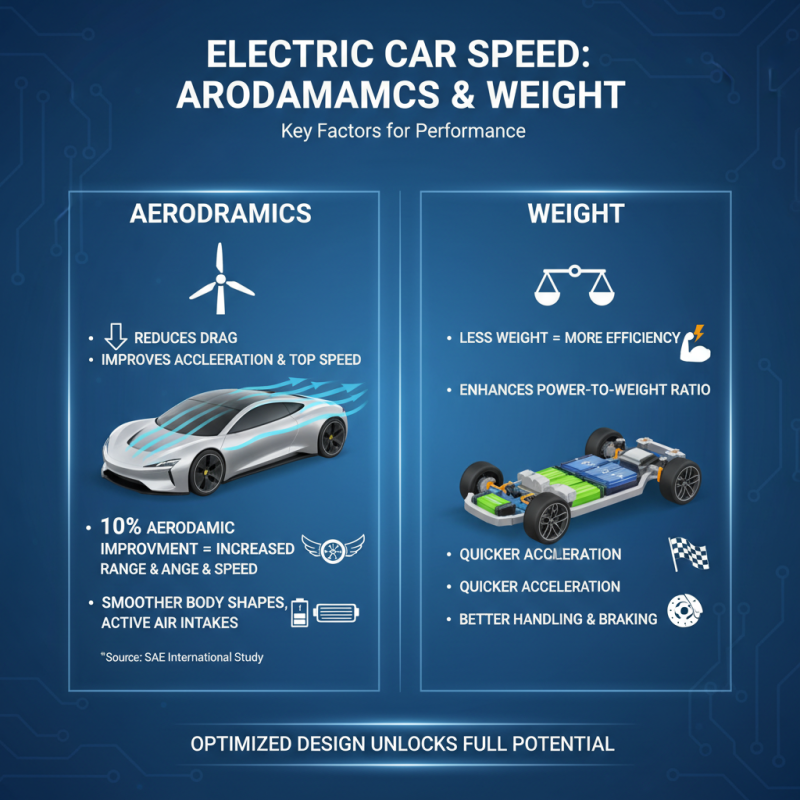
Aerodynamics and weight are two critical factors that significantly influence the speed of electric cars. Research indicates that aerodynamics plays a vital role in reducing drag, which can impede acceleration and top speed. A study conducted by the SAE International revealed that improving a vehicle's aerodynamics by just 10% can enhance efficiency and thus increase its range and speed potential. Electric cars, with their inherent design flexibility, can incorporate features like smoother body shapes and active air intakes to optimize airflow, thereby achieving better performance on the road.
Equally important is weight, as it directly affects the vehicle's acceleration and efficiency. According to the International Council on Clean Transportation (ICCT), a reduction of 1,000 pounds can lead to a 10% improvement in acceleration and a significant increase in range. Electric cars typically utilize lightweight materials such as aluminum and composites to offset the substantial weight of their batteries. The ongoing trend towards battery technology advancements aims not only to increase energy density but also to reduce overall weight, enabling electric vehicles to achieve higher speeds while maintaining energy efficiency. Together, these factors underscore the importance of considering both aerodynamics and weight in the design and performance evaluation of electric cars.
Comparison of Electric Cars: Speed Rankings and Performance Analysis
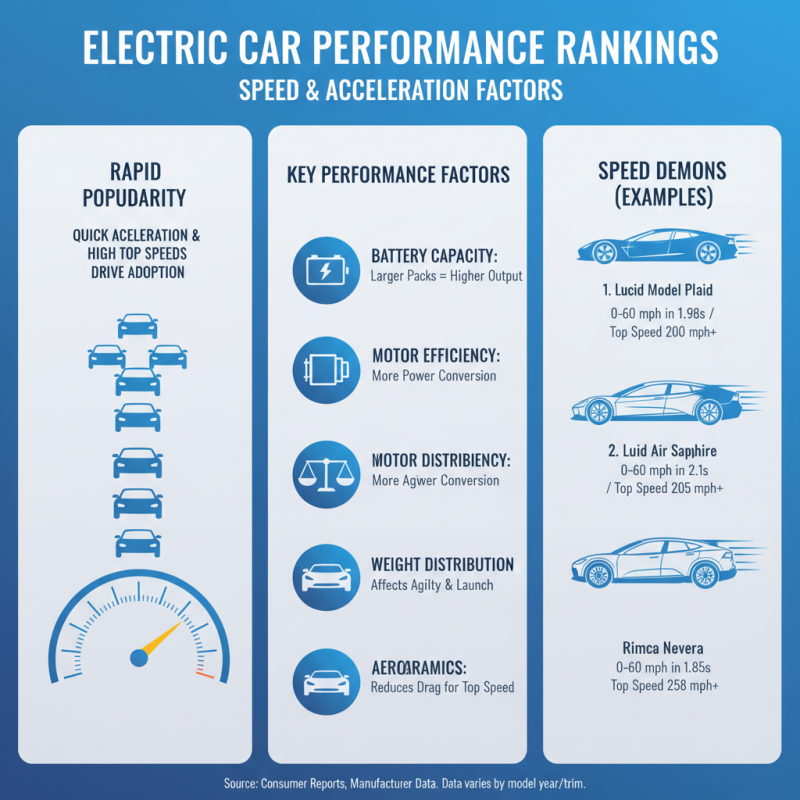
Electric cars have rapidly gained popularity, primarily due to their impressive acceleration and top speeds. A critical aspect of evaluating electric vehicles is analyzing their speed rankings, which provides consumers with insight into performance capabilities. Various models exhibit distinct characteristics, influenced by factors such as battery capacity, motor efficiency, weight distribution, and aerodynamics. For instance, models equipped with larger battery packs typically offer higher power outputs, resulting in quicker acceleration times and higher top speeds.
Performance analysis goes beyond mere numbers; it also examines how electric cars maintain their speed over long distances and under different driving conditions. Factors such as regenerative braking systems and thermal management play essential roles in enabling electric vehicles to sustain performance efficiency. Furthermore, advancements in technology are consistently pushing the boundaries of what's possible in speed rankings, with new innovations leading to faster, more agile electric vehicles that rival traditional combustion-engine competitors. Lastly, the integration of lightweight materials helps improve overall performance, enhancing the speed potential of electric cars while maintaining safety and comfort for drivers and passengers alike.