10 Essential Tips for Choosing the Right Electric Automobile for You
As the electric automobile industry continues to evolve, potential buyers face a myriad of options that can make the decision-making process daunting. According to Dr. Emily Green, a renowned expert in electric vehicle technology, "Choosing the right electric automobile is not only about considering the battery range or price; it's about understanding your lifestyle and how the vehicle fits into it." This statement encapsulates the complexities involved in selecting the perfect electric vehicle, addressing both practical considerations and personal preferences.
The surge in electric vehicle popularity is shaped by increasing environmental awareness, advancements in technology, and government incentives. With so many variants available, from compact models ideal for city dwellers to longer-range options suitable for long-distance travel, it is crucial for consumers to focus on their specific needs and circumstances. Factors such as budget, charging infrastructure, and driving habits all play a significant role in determining which electric automobile will serve you best.
In this guide, we will explore ten essential tips designed to simplify the decision-making process, ensuring that your next electric automobile not only meets your expectations but also enhances your driving experience in an eco-friendly way. Whether you're a first-time buyer or looking to upgrade, understanding these considerations will empower you to make an informed choice that aligns with your unique lifestyle.
Understanding Your Driving Needs and Habits
When choosing the right electric automobile, understanding your driving needs and habits is paramount. Begin by evaluating how you typically use your vehicle. Consider your daily commute, the distances you frequently travel, and whether you often take long road trips. For those who primarily drive short distances, a model with a smaller battery capacity may suffice, allowing for a more economical choice. Conversely, if your lifestyle includes regular long-distance driving, prioritizing a vehicle with an extended range is essential to ensure comfort and convenience.
Additionally, think about your charging habits. Do you have access to a home charging station, or do you rely on public charging infrastructure? This will influence the type of electric automobile you select. If you can charge at home, you might opt for a model with a longer charging time, as you can plug it in overnight. However, for those who depend on public charging, look for a car with fast-charging capabilities. Assessing your typical driving patterns and charging accessibility will help tailor your choice to better fit your lifestyle, ultimately enhancing your electric vehicle experience.
10 Essential Tips for Choosing the Right Electric Automobile for You - Understanding Your Driving Needs and Habits
| Criterion |
Details |
| Driving Range |
Consider your daily commuting distance and choose a model that can cover that range on a single charge (e.g., 200-300 miles). |
| Charging Infrastructure |
Check the availability of charging points at home, work, and along your usual routes. |
| Battery Life |
Look for warranties and performance metrics regarding battery lifespan (typically 8-10 years). |
| Budget |
Factor in the upfront cost as well as potential savings on fuel and maintenance over time. |
| Vehicle Size and Space |
Choose a size that accommodates your lifestyle (e.g., family size, cargo space). |
| Performance and Handling |
Test drive to ensure the car meets your expectations for acceleration, braking, and overall handling. |
| Technology and Features |
Evaluate tech features like autopilot, connectivity, and infotainment systems that fit your needs. |
| Environmental Impact |
Consider the overall environmental benefits and whether it's from renewable energy sources. |
| Incentives and Rebates |
Research local and federal incentives that can reduce the cost of purchasing an electric vehicle. |
Evaluating Electric Vehicle Range and Battery Life
When evaluating electric vehicles (EVs), a critical factor to consider is the vehicle's range and battery life. The range refers to the distance an EV can travel on a single charge, which can vary widely among different models. It's essential to assess how far you typically drive on a daily basis. If your commute is longer than the car's range, you may face challenges with potential range anxiety, worrying about running out of battery during a journey. Look for vehicles that exceed your daily driving needs to allow for unexpected trips without constant charging.
Battery life is another crucial factor that should not be overlooked. The longevity of an EV's battery affects its performance and the cost of ownership over time. Most electric vehicles come with warranties that cover the battery for a certain number of years or miles. Researching how battery degradation occurs in different models can provide insights into how much range you can expect throughout the vehicle's life. Consider exploring the availability of battery replacement options and strides in technology that may improve battery efficiency as this can impact your long-term satisfaction with your chosen vehicle.
Electric Vehicle Range and Battery Life Comparison
Exploring Charging Options and Infrastructure Availability
When considering the transition to an
electric vehicle (EV), understanding the
charging options and infrastructure availability is crucial.
As of 2023, there are approximately 130,000 public charging stations
across the United States, with a projection of this number reaching 500,000
by 2030, according to the International Council on Clean Transportation.
This rapid growth is aimed at alleviating range anxiety,
which remains a key concern among potential EV buyers. The availability of
fast-charging stations, particularly along major highways,
significantly influences the practicality of electric cars for long-distance travel.
Moreover, the types of charging options available—Level 1, Level 2,
and DC fast charging—offer varying speeds and accessibility.
Level 1 chargers are convenient for home use but take a considerable amount of time
to fully charge a vehicle. In contrast, Level 2 chargers, which are increasingly being installed in public spaces,
can deliver a full charge in just a few hours. Meanwhile, DC fast chargers can recharge an EV to about
80% in around 30 minutes, drastically improving overall convenience.
A report from the U.S. Department of Energy highlights that nearly 70% of EV owners primarily
charge at home, underlining the importance of residential charging infrastructure in supporting the growing
adoption of electric vehicles.
As you evaluate your options, consider not only the current charging availability in your area
but also prospective developments. Urban areas
typically offer better charging infrastructure compared to rural regions, which can affect your overall
experience with an EV. Researching local charging networks and understanding your charging habits
will empower you to make an informed decision, ensuring that your electric vehicle choice aligns with
both your lifestyle and the evolving technological landscape.
Considering Budget and Incentives for Electric Vehicles
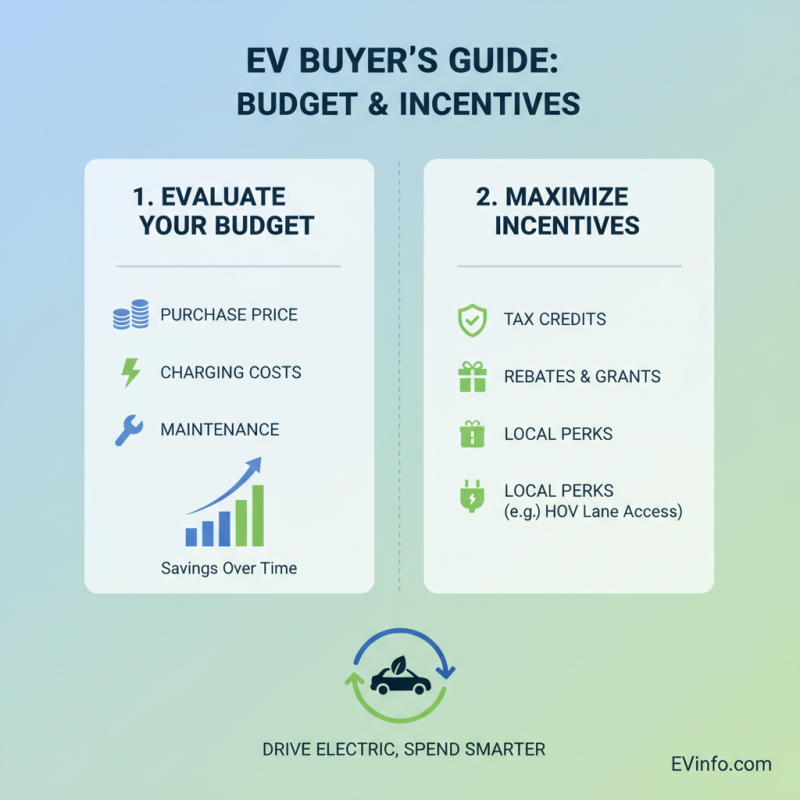
When choosing the right electric vehicle (EV) for your needs, considering your budget and available incentives is crucial. Electric cars can vary widely in price, from affordable models to high-end versions. Begin by evaluating your budget, including not just the purchase price but also running costs such as charging and maintenance. Being aware of how electric vehicles typically offer savings over time can help shape your decision.
Additionally, many governments offer incentives to encourage the adoption of electric vehicles. These can include tax credits, rebates, and grants that can significantly lower the overall cost of your car. Researching local and federal programs that apply to electric vehicle purchases is an important step in your buying process.
When weighing your options, ensure that you factor in these incentives as part of your budget assessment. Here are a couple of tips to guide your choice: First, check if there are any additional perks, such as reduced registration fees or preferred parking for electric car owners. Second, look into charging infrastructure incentives that might also assist you in setting up home charging solutions at a lower cost. By fully understanding the financial landscape of electric vehicles, you can make a more informed decision that aligns with your budget and lifestyle needs.
Researching Safety Ratings and Technology Features
When choosing an electric automobile, one of the most critical factors to consider is
safety ratings. Various organizations conduct thorough assessments of vehicles to gauge their performance in crash tests and the effectiveness of their safety features. Look for vehicles that have high ratings in these assessments, as they indicate
a better level of protection for you and your passengers. The newer models often incorporate advanced safety features such as
automatic braking, lane-keeping assistance, and pedestrian detection, which can significantly reduce the likelihood of accidents.
In addition to safety ratings, evaluating the
technology features of electric vehicles is essential. Look for models equipped with
user-friendly interfaces, advanced navigation systems, and compatibility with your mobile devices. Many electric cars now come with smart technology that enhances both driving efficiency and convenience, such as
regenerative braking and
real-time battery monitoring. Understanding these technology offerings not only aids in making your driving experience more enjoyable but also helps in
maximizing the overall benefits of owning an electric vehicle.