
Finding a reliable Automobile Electric supplier can shape product quality, production schedules, and after-sales service. A polished catalog is not enough. Buyers need evidence that parts match their specifications and perform consistently across orders. Small differences matter: a connector’s pin layout, insulation thickness, or stated operating range can affect installation and reliability.
Start by checking the supplier’s technical documentation, product range, and quality-control process. Ask for datasheets, test reports, and clear product identification. Confirm that part numbers and specifications match your drawings or sample requirements. Details should line up. If answers stay vague, pause and ask again.
Samples can reveal issues that documents miss. Inspect the housing, terminals, wire markings, and fit with related components. Where possible, test samples under conditions that reflect their intended use. A short trial may uncover a loose connection or unclear labeling. No shortcut here. Testing takes time, and it may not predict every field condition.
Look beyond the unit price. Review lead times, minimum order quantities, packaging, and the process for handling defects or changes. Ask how the supplier communicates when materials or production dates shift. A dependable partner should give specific answers and provide a practical point of contact. Check references or request examples of similar supply experience, while recognizing that one positive reference is not proof of consistent performance.
No checklist removes every uncertainty. Some details may still need clarification, and that is worth acknowledging. A careful comparison of documentation, samples, communication, and delivery records gives buyers a stronger basis for choosing a supplier.
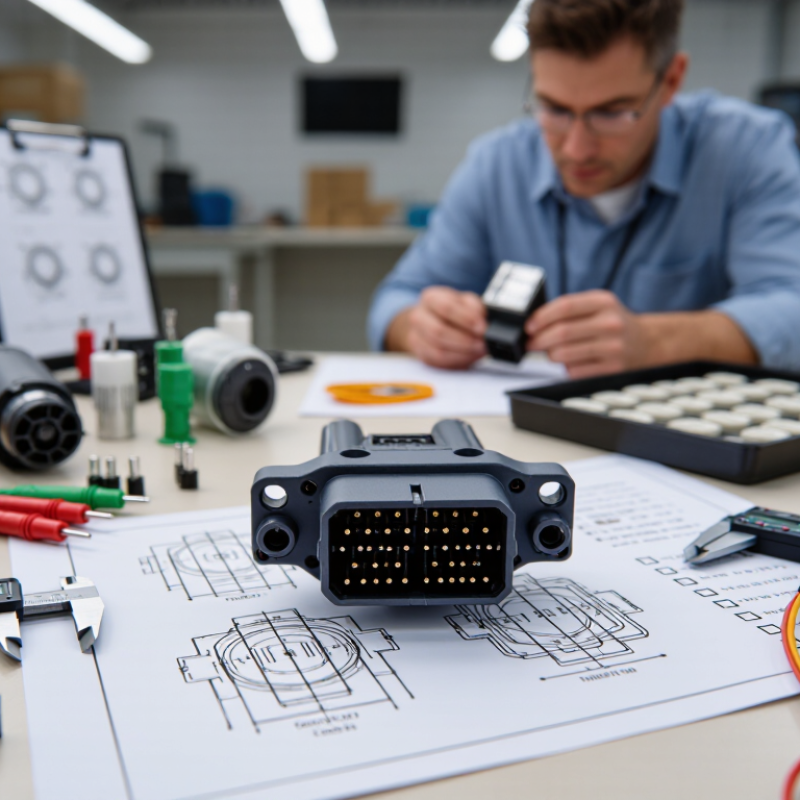
Before contacting automobile electric suppliers, translate the vehicle’s operating conditions into a clear component specification. List the required voltage, continuous and peak current, connector type, cable length, and expected service life. Include the real environment: under-hood heat, road vibration, moisture, dust, and tight routing near moving parts. Small details matter. A connector that fits on a bench may loosen after repeated vibration. Specify acceptable temperature ranges and test evidence, rather than relying on broad claims such as “automotive grade.” Identify relevant quality and component standards for your application, then ask suppliers how they document compliance and traceability.
Demand planning belongs in the specification too. The International Energy Agency’s Global EV Outlook 2024 reports that electric car sales reached nearly 14 million in 2023, about 18% of global car sales. This shift increases the need to define whether parts must support high-voltage systems, low-voltage electronics, or both. State annual volume, prototype quantities, delivery windows, and likely design changes. Ask about production capacity, alternative materials, and change-notification procedures. Get sample lead times in writing. That part is easy to overlook. I have seen early sourcing discussions focus on price while leaving thermal limits and connector pinouts vague; those gaps can trigger costly redesigns. A one-page requirements sheet gives suppliers a fair basis for quoting and makes their technical responses easier to compare.

A reliable automobile electric supplier should understand how vehicle electrical parts perform beyond a clean factory bench. Look for experience with the component type you need, such as wiring assemblies, connectors, relays, or sensors. Ask how their team handles vibration, heat, moisture, and repeated electrical loads. These details reveal whether their knowledge fits real vehicle conditions.
Ask for examples of comparable projects, with customer names removed if needed. A capable supplier can explain its testing process, inspection records, and methods for tracing parts by production lot. Talk directly with an engineer, not only a sales contact. That matters. Notice whether answers include practical details, such as test limits or how defects are investigated. Experience can be uneven, even inside one company, so verify that the staff and equipment assigned to your order match the claims. A long operating history alone proves little. Review a sample quality document, discuss a previous production issue, and listen for clear, specific explanations. If the answers stay vague, keep asking.
When evaluating an automobile electric supplier, ask for evidence tied to the exact component—not just a polished certificate. Check whether its quality system certification, such as IATF 16949, is current and covers the manufacturing site supplying your order. Then review product-specific test reports for operating temperature, vibration, insulation, and current capacity. A connector may look solid on a desk but loosen after repeated heat cycles. Paperwork is not proof. Confirm the issuing body and certificate scope, and match part numbers and production locations across documents. Independent testing from an ISO/IEC 17025-accredited laboratory can add useful assurance, but it does not replace checking whether the test conditions match real vehicle use.
Traceability matters when a defect appears months later. Request sample lot records, inspection results, and a clear process for handling failures. NHTSA’s 2023 recall data recorded more than 1,000 safety recalls, a reminder that small component issues can have wide consequences. Ask suppliers how they investigate root causes and notify customers when parts fail. A supplier may have strong certificates yet weak records for a particular production batch; that gap deserves scrutiny. Review a physical sample too, especially wire crimping, seals, and terminal fit. I would not treat a single passing test as a guarantee. Real-world conditions are messy, and supplier evidence should be specific, current, and independently verifiable.
| Verification Area | Evidence to Request | What to Check | Why It Matters |
|---|---|---|---|
| Automotive quality management | Current IATF 16949 certificate, or ISO 9001 certificate where applicable | Confirm the certificate is valid and verify that its scope and listed manufacturing site cover the products being supplied. Check the issuing certification body and applicable accreditation or oversight information. | IATF 16949 and ISO 9001 address quality-management systems; neither is, by itself, proof that an individual component has been tested or approved. |
| Product-specific safety approval | Applicable type-approval documents, test reports, or certification records for the exact component | Match the part number, product type, intended use, applicable regulation or standard, and destination market. Verify approval details with the relevant issuing authority or certification body when possible. | Requirements vary by component and market. A certificate for a different model or product family may not apply. |
| Electrical and environmental testing | Test reports for relevant electrical, temperature, vibration, moisture, or ingress-protection requirements | Check the tested sample identification, test methods, results, report date, and whether the conditions represent the component’s intended installation and use. | Automotive electrical components can face heat, vibration, moisture, and electrical stresses that affect performance and service life. |
| Laboratory competence | Test reports identifying the laboratory and its relevant accreditation, where applicable | Check whether the laboratory’s ISO/IEC 17025 accreditation covers the specific test methods or technical scope cited in the report. | ISO/IEC 17025 concerns laboratory competence; it does not certify the supplier or automatically approve the product. |
| Restricted-substance compliance | Material declarations and supporting compliance documentation for applicable requirements | Confirm the documentation identifies the relevant product or materials and addresses the rules that apply in the intended market, such as RoHS or applicable REACH obligations. | Substance requirements depend on product category and jurisdiction; a general statement may not establish compliance for every part or market. |
| Traceability and change control | Sample labels, lot or batch records, and documented engineering-change procedures | Check whether the supplier can link supplied parts to production lots and notify customers before changes to materials, design, manufacturing site, or process. | Traceability supports investigation of quality issues, while change control helps prevent unreviewed product variations. |
| Ongoing quality performance | Inspection records, nonconformance reports, corrective-action records, and agreed quality metrics | Review how defects are contained, investigated, corrected, and monitored. Compare records with the buyer’s own acceptance criteria and supplier-quality requirements. | Current, documented quality practices provide evidence beyond certificates and help assess consistency over time. |
Verification tip: Check certificates and approvals with their issuers where possible, and confirm that every document matches the exact product, manufacturing location, and target market.
A reliable automobile electric supplier should make pricing easy to compare. Request itemized quotes for connectors, wiring, relays, and other specified parts. Check whether prices include packaging, freight, minimum order quantities, and taxes. Ask how long each quote remains valid. A low unit price can hide costly fees or frequent increases. Small gaps matter. Confirm that the quoted part specifications match your drawings and quality requirements.
Tips: Compare total delivered cost, not just unit price. Ask suppliers to distinguish physically available stock from incoming inventory. Request current stock figures, replenishment dates, and written delivery estimates. For urgent orders, confirm the shipment cutoff time and available tracking. Ask for evidence.
Delivery capability matters as much as stock. Check how the supplier handles backorders, split shipments, and unexpected delays. A clear contact person and prompt updates can prevent production teams from waiting without a plan. One detail buyers sometimes overlook is packaging: poorly protected terminals or connectors may arrive bent or contaminated. I would also verify how shortages are communicated; a confident estimate is useful, but it is not a guarantee. Compare recent delivery performance against quoted lead times, and keep the records. That gives you a practical basis for deciding whether the supplier can support steady orders, not just one successful shipment.
Assess Pricing, Inventory, and Delivery Capabilities
Example checklist ratings on a 1–5 scale, not market statistics. Compare written quotes, confirmed stock, and documented delivery performance before choosing a supplier.
Reliable automobile electrical suppliers prove their value after the quote arrives. Ask how quickly staff answer technical questions and whether they can verify connector types, voltage ratings, and vehicle fitment. A useful reply should include specific details, not just “it should work.” Test them with a real part number. Notice whether they ask for your vehicle’s year, model, and engine before recommending a component.
Compare warranties line by line. Check the coverage period, exclusions, return shipping costs, and how defective parts are assessed. Ask whether a replacement can be shipped while a failed unit is being inspected. Get the terms in writing. A long warranty sounds reassuring, but vague conditions can make it difficult to use. Keep the invoice and record the product’s batch or serial number when available.
Supplier reliability shows up in repeatable details: accurate stock estimates, intact packaging, and consistent delivery updates. Ask how they handle backorders and whether electrical components are tested before dispatch. No supplier is flawless; delays can happen. I would treat a polished catalog as only a starting point, because it cannot show how support behaves when a vehicle is waiting for repair. Compare several suppliers using the same questions, then weigh clear communication against price and delivery promises.