Leave Your Message
Choosing a Hybrid Electric Vehicle now requires more than comparing fuel economy figures. Global buyers face different fuel prices, charging access, taxes, road conditions, and service standards. A vehicle that suits Tokyo may feel inconvenient in rural Canada or costly to maintain in Nairobi.
The International Energy Agency’s Global EV Outlook 2024 reported nearly 14 million electric car sales worldwide in 2023, representing about 18% of new car sales. This momentum is influencing hybrid technology, even though hybrids still use combustion engines. Deloitte’s 2024 Global Automotive Consumer Study also showed that buyers remain highly concerned about vehicle price, driving range, charging availability, and ownership costs. Those concerns deserve practical attention.
This guide presents ten buying tips for international shoppers. It examines powertrain design, real-world fuel consumption, battery warranties, resale value, climate performance, and local servicing. Look beyond the showroom sticker. A compact hybrid may save fuel during congested city commutes, while a larger model may perform better on steep roads and long-distance routes. Check the battery warranty in writing. Ask whether trained technicians and replacement parts are available near you.
Small details matter.
For example, test the vehicle with luggage, passengers, and air conditioning switched on. Compare official economy figures with owner reports from similar climates. No checklist is flawless. Manufacturer claims can differ from daily experience, and exchange rates can quickly change affordability. Careful research, verified records, and an honest assessment of driving habits can make a Hybrid Electric Vehicle a more reliable global purchase.
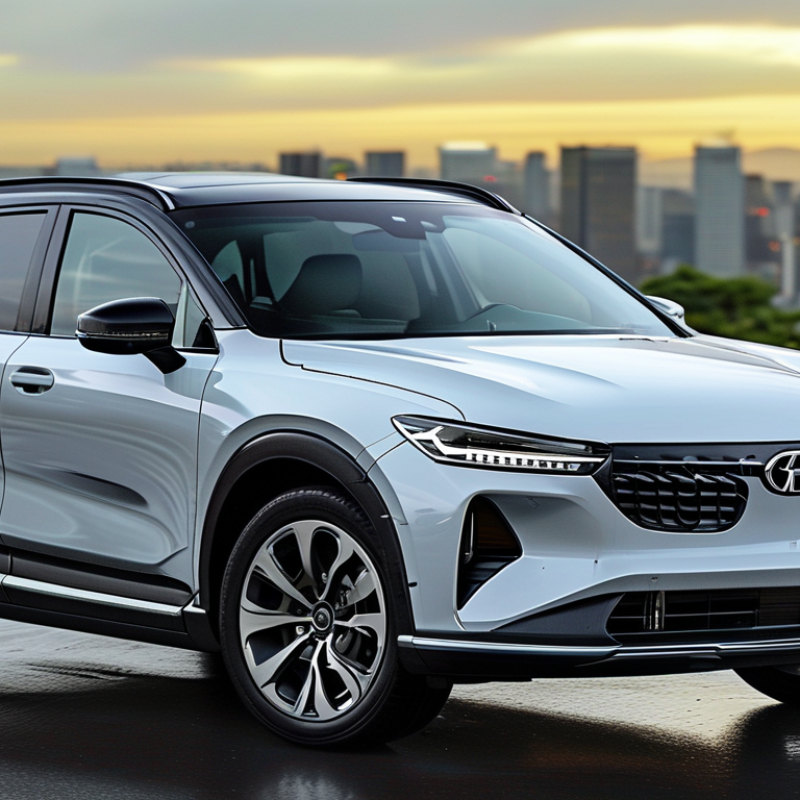
Hybrid powertrains combine a combustion engine with one or more electric motors. A high-voltage battery stores recovered braking energy. The motor can assist during acceleration, reducing fuel use and engine strain. In a parallel hybrid, the engine and motor can drive the wheels together. In a series hybrid, the engine mainly generates electricity. Some systems use both operating methods. Understand this difference before comparing prices. Drive both types if possible.
A conventional hybrid recharges through braking and engine operation. It does not normally need an external cable. A plug-in hybrid has a larger battery and supports outside charging. It may complete short daily trips using electricity alone. Without regular charging, its extra weight can reduce efficiency. A mild hybrid offers limited electric assistance. It usually cannot move independently on electric power. Check charging times, cable compatibility, battery warranty, and local electricity standards. Ask about replacement costs, too.
Global buyers should study real traffic, temperature, road quality, and service access. Cold climates can reduce electric range and regenerative braking performance. Hot climates may increase cooling demands. During a test drive, watch the energy display during hills and stops. Notice pedal response and cabin noise. Request fuel figures from mixed driving, not only laboratory testing. The advertised result can disappoint. A larger battery is not automatically better. It can add weight, cost, and charging needs. One practical mistake is choosing electric range without checking home parking. An honest comparison includes purchase price, maintenance, insurance, and resale expectations.
| No. | Buying Tip | Powertrain or Vehicle Type | What to Check | Typical Technical Information | Best Fit | Important Limitation |
|---|---|---|---|---|---|---|
| 1 | Identify the hybrid system before comparing vehicles. | Mild hybrid | Confirm whether the electric motor can drive the vehicle independently. | Usually uses a 12-volt or 48-volt electrical system; the motor mainly assists acceleration, enables smoother stop-start operation, and recovers braking energy. | Drivers seeking lower fuel use and smoother operation without external charging. | It generally cannot provide sustained electric-only driving. |
| 2 | Choose a full hybrid when charging access is limited. | Full hybrid | Check the battery warranty, hybrid-system warranty, and availability of qualified service. | Can use engine power, electric power, or both; the battery is charged mainly by regenerative braking and the engine. | Mixed city and highway driving where regular charging is inconvenient. | Electric-only operation is normally limited in speed, distance, and battery state of charge. |
| 3 | Match a plug-in hybrid to your daily distance. | Plug-in hybrid electric vehicle | Compare certified electric range, usable battery capacity, charging connector, and local charging compatibility. | Many current passenger models offer approximately 30–100 km of certified electric range, but actual results vary with temperature, speed, terrain, and heating or cooling use. | Drivers who can charge at home or work and often travel within the electric range. | Fuel consumption can be much higher than the official combined figure if the battery is rarely charged. |
| 4 | Understand series, parallel, and power-split layouts. | Hybrid transmission architecture | Ask how the engine connects to the wheels and test the vehicle in city, highway, and uphill conditions. | A series system uses the engine primarily as a generator; a parallel system can connect the engine directly to the wheels; a power-split system can combine both operating principles. | Buyers comparing driving feel, efficiency, and high-speed performance. | Efficiency and acceleration characteristics differ substantially between layouts, even when battery sizes are similar. |
| 5 | Evaluate fuel economy using your real driving pattern. | All hybrid types | Review certified city, highway, and combined figures under the testing standard used in your market. | Hybrids often gain more efficiency in stop-and-go traffic because regenerative braking can recover energy that would otherwise become heat. | Urban and suburban drivers with frequent braking and moderate speeds. | High speeds, cold weather, heavy loads, hills, and aggressive driving can reduce the efficiency advantage. |
| 6 | Check battery warranty terms, not just the warranty length. | High-voltage battery system | Verify years, mileage limits, minimum capacity coverage, exclusions, and whether coverage transfers to later owners. | Warranty conditions vary by jurisdiction and vehicle type; some markets provide longer coverage for high-voltage components than for the rest of the vehicle. | Used-vehicle buyers and owners planning long-term use. | Warranty coverage does not eliminate normal aging, accident damage, improper storage, or maintenance exclusions. |
| 7 | Confirm charging practicality before selecting a plug-in model. | Plug-in hybrid or extended-range hybrid | Check household electrical standards, connector type, cable requirements, parking permission, and electricity tariffs. | A standard household outlet may require several hours for charging; a dedicated AC wall unit can provide greater convenience, subject to vehicle and local electrical limits. | Owners with secure overnight parking and predictable access to electricity. | Charging speed and connector availability differ by model, region, and electrical installation. |
| 8 | Inspect cargo space, passenger space, and towing limits. | Hybrid SUV, sedan, hatchback, or wagon | Compare luggage volume, rear-seat legroom, ground clearance, payload, roof load, and braked or unbraked towing ratings. | The battery and power electronics may be located under the rear seat, cargo floor, or other areas, reducing usable storage in some designs. | Families, fleet users, and drivers carrying equipment or towing trailers. | A larger body style does not automatically mean greater payload or towing capacity. |
| 9 | Estimate ownership cost using local conditions. | All hybrid vehicle types | Include fuel or electricity prices, taxes, insurance, servicing, tires, import duties, and available incentives. | Hybrid maintenance still includes tires, brakes, fluids, filters, and inspections; regenerative braking may reduce friction-brake wear, but results vary. | Buyers comparing total cost over several years rather than only purchase price. | Government incentives, taxes, fuel prices, and repair costs can change by country or region. |
| 10 | Test the vehicle in conditions that reflect your daily use. | Any hybrid vehicle | Test cold starts, traffic, hills, highway cruising, parking, climate control, and transition between engine and electric operation. | Cold temperatures can reduce battery performance and electric range; heating may also require additional energy, especially in electric-dominant modes. | Global buyers facing varied climates, road quality, elevations, and driving habits. | Official range and fuel-economy results are laboratory figures and should not be treated as guaranteed real-world performance. |
Note: Technical ranges and operating characteristics are general industry guidance. Actual performance depends on vehicle design, local certification procedures, temperature, driving style, road conditions, payload, maintenance, and charging behavior.