Small Electric Car Tips for Choosing the Best Option?
Choosing a small electric car can feel overwhelming. The market is booming, with over 1.5 million electric vehicles sold in 2021 alone. Industry reports predict this number will reach 3 million by 2025, highlighting the growing demand.
When selecting a small electric car, consider factors like range, charging options, and price. Many models today offer over 200 miles per charge, suitable for daily commutes. However, charging infrastructure can be a concern in certain areas, affecting your choice. A report from the International Energy Agency states that adequate charging stations remain essential for consumer confidence.
Don't overlook personal preferences. Some buyers prioritize sustainability, while others focus on design or technology features. Many small electric cars do not offer spacious interiors. This constraint can impact family needs, making it essential to reflect on your lifestyle. Balancing performance, comfort, and environmental impact may require thoughtful consideration.
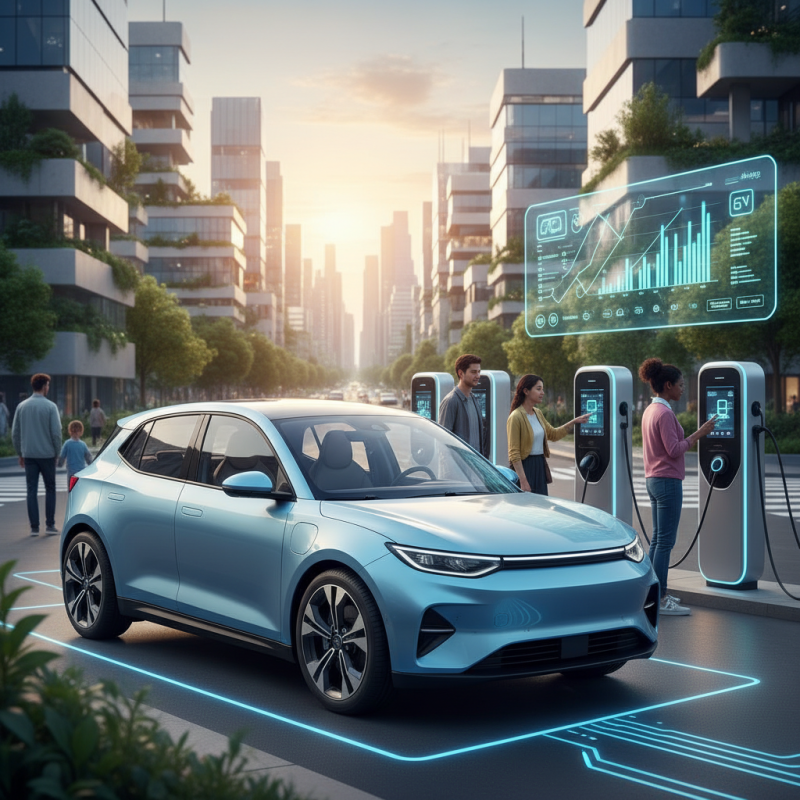
Factors to Consider When Choosing a Small Electric Car
When choosing a small electric car, several factors come into play. The vehicle’s range is crucial. Many small electric cars can cover 100 to 200 miles on a single charge. Consider your daily driving needs. If you often travel long distances, you might need a car with a larger battery.
Charging options also matter. Check if home charging is feasible for you. Public charging stations are common but vary by location. It's essential to know how long charging will take. Some models offer fast charging, while others may require hours.
Space and comfort are other considerations. Small electric cars often have compact designs. This may limit interior space. Think about your passenger needs. Does it offer enough legroom for your family? Visibility and safety features are important too. Don’t overlook the importance of a good safety rating.
Finally, the price can be a deciding factor. Electric cars may cost more upfront. However, savings on fuel and maintenance are significant in the long run. Research available tax incentives for electric vehicles. Weigh these aspects carefully when making your decision.
Factors to Consider When Choosing a Small Electric Car
Evaluating Electric Vehicle Range: Understanding Your Daily Driving Needs
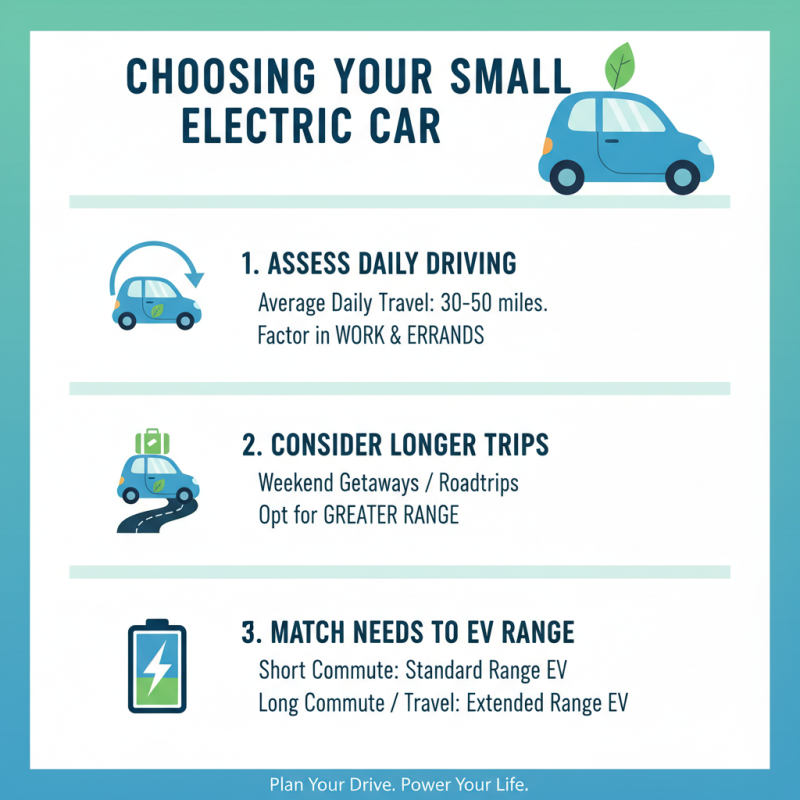
When choosing a small electric car, understanding your daily driving needs is crucial. Begin by evaluating the distance you travel each day. On average, many people drive between 30 to 50 miles daily. Knowing this helps narrow down your options for electric vehicle range. Don’t forget to consider weekend trips too. If you enjoy longer drives, you’ll need a car with a greater range.
Battery capacity plays a significant role in determining how far your vehicle can go. Some small electric cars may offer impressive ranges, but they might not suit your driving habits. A smaller battery might seem appealing, but think twice. What if you need to travel unexpectedly? Charging stations aren't always available. Those factors can turn a simple trip into a stressful experience.
It’s essential to reflect on your charging habits. Do you have access to home charging? If yes, a shorter range might work for you. However, if you rely on public charging, consider a vehicle with a greater range. Keep in mind that some drivers find themselves running low on charge before they can plug in. This aspect is often overlooked but important for daily peace of mind.
Battery Capacity and Charging Options: What You Need to Know
When choosing a small electric car, battery capacity and charging options are crucial factors. The battery is the heart of an electric vehicle. It determines how far you can drive on a single charge. Typically, a higher battery capacity means a longer range. You might see options ranging from 100 to over 300 miles. However, more capacity often comes with a higher price tag.
Charging options also need your attention. Some models can charge at home using standard outlets. Others require special equipment for faster charging. Public charging stations are becoming more common. Still, not every area has them. Check the availability of these stations in your daily routes. It's not just about convenience; it’s about planning your trips.
Consider your charging habits and lifestyle. Are you someone who drives long distances frequently? You may need a larger battery and fast charging capabilities. If you mainly use the car for short commutes, a smaller battery could suffice. Yet, unexpected delays can happen. Relying solely on public chargers might lead to frustration. Analyzing these details can guide you to the best option for your needs.
Cost of Ownership: Comparing Purchase Price and Long-term Expenses
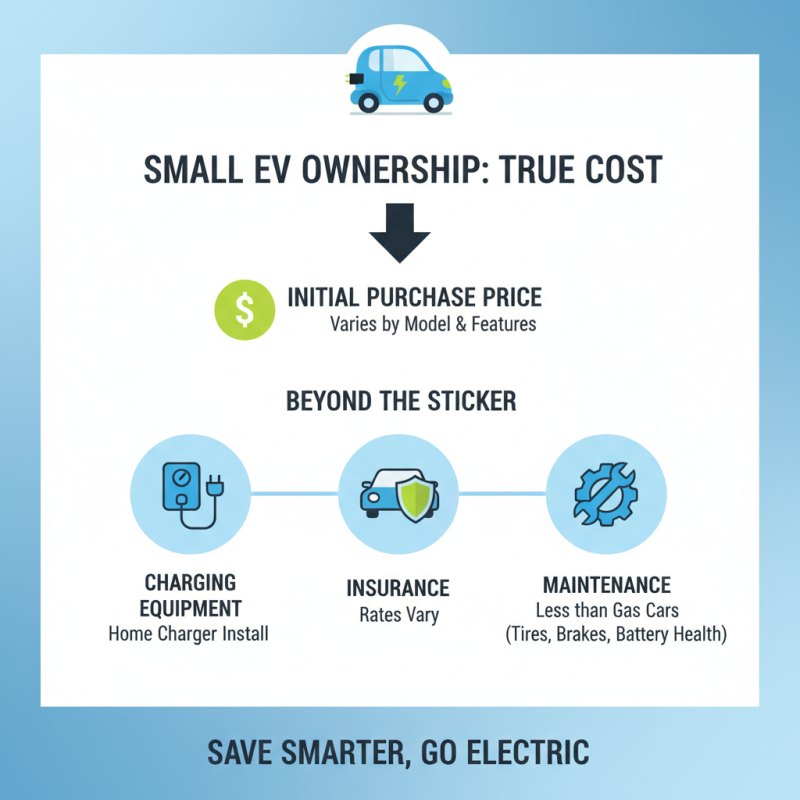
When choosing a small electric car, the cost of ownership plays a critical role. The initial purchase price can vary greatly, often influenced by features and capabilities. Some models may seem affordable upfront, but it’s essential to look beyond the sticker price. Hidden costs can add up quickly. Charging equipment, insurance, and maintenance are often overlooked.
Long-term expenses include electricity costs. These can vary depending on local rates. You might think charging at home is cheaper, but public charging stations can be pricey. Another factor is battery longevity. Replacement can be expensive and might not come cheap when the time arrives.
However, some benefits can ease these costs. Tax incentives and fuel savings are significant. Owning an electric car can reduce your carbon footprint. Still, balancing these factors requires careful thought. Bernal's wear and tear can impact overall value. Reflect on your driving habits and budget to choose wisely. Purchasing an electric car isn't just about the price; consider the long-term implications.
Safety Ratings: Importance of Crash Test Results for Small Electric Cars
When selecting a small electric car, safety ratings are critical. Crash test results provide essential insights. The National Highway Traffic Safety Administration (NHTSA) and the Insurance Institute for Highway Safety (IIHS) conduct these tests. High scores in these evaluations often reflect a vehicle’s ability to protect occupants. For instance, smaller cars can sometimes struggle in crash tests compared to larger models.
It's vital to consider the ratings from these organizations. Many small electric cars earn four or five-star ratings, but some do not. A report showed that vehicles with top ratings reduced injury risk by 50%. Opting for models with proven safety records can lead to better overall protection.
Tips: Before choosing, look up recent crash test results. Consider independent reviews to get varied opinions. Check for features like stability control and advanced airbags. Some small electric cars may lack advanced safety tech. Don't overlook this aspect; your safety matters most.