Leave Your Message

7 Best Electric Pickup Trucks for Global Buyers?

Electric pickup trucks are moving from ambitious prototypes to practical tools for work, travel, and family life. Buyers now compare more than acceleration. They examine towing strength, battery range, charging access, payload limits, cabin comfort, software quality, and repair support. These details matter even more across different countries, where road conditions, climate, electricity networks, and import rules can vary sharply.

Rivian founder and CEO RJ Scaringe once said, “We’re not trying to make an electric vehicle; we’re trying to make a great vehicle that happens to be electric.” That idea offers a useful standard for this guide. A capable Electric Pickup Truck should feel dependable on a muddy jobsite, stable on a highway, and manageable beside a home charger. It should also provide clear range information when cold weather, heavy cargo, or a trailer reduces efficiency. Real experience can be less polished than a brochure suggests. Range estimates are not promises.

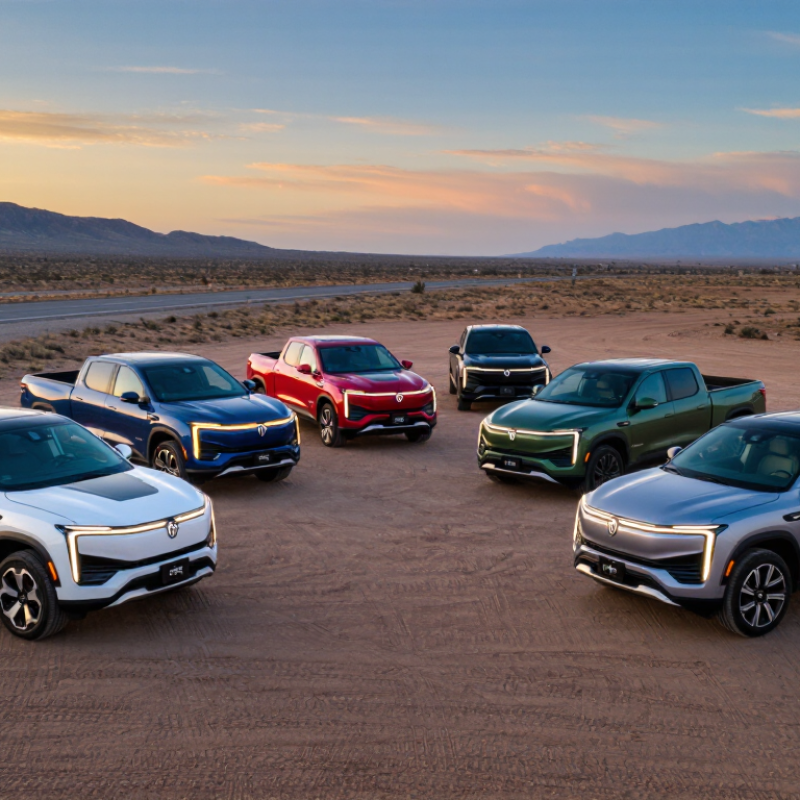
This overview examines seven leading electric pickup trucks for global buyers, including established models and newer competitors. It considers performance, usable range, charging behavior, practicality, technology, safety, and market availability. Some trucks excel at towing. Others suit urban owners or adventurous drivers. Few perform perfectly everywhere. That is worth admitting.

Specifications can change by market and model year. Local service coverage may matter more than a dramatic horsepower figure. Buyers should verify regional pricing, warranty terms, charging standards, and payload ratings before making a decision. The best choice is not always the fastest truck. It is the one that fits real daily needs without creating avoidable compromises.
7 Best Electric Pickup Trucks for Global Buyers?

What Defines an Electric Pickup Truck for Global Buyers

What defines an electric pickup truck for global buyers is not battery size alone. It must carry tools, protect cargo, and remain useful after a long day on rough roads. Payload, ground clearance, towing stability, and charging speed matter equally. Range matters.

The IEA’s Global EV Outlook 2024 projected more than 17 million electric car sales worldwide in 2024, showing stronger acceptance of electric mobility. However, passenger-car data cannot fully explain pickup buyers. Deloitte’s 2024 Global Automotive Consumer Study identified vehicle price, charging access, and driving range as major electric-vehicle concerns. These concerns become sharper when a truck carries heavy equipment or works far from cities. A practical global model should offer a dependable real-world range, not only an optimistic laboratory figure. It also needs flexible charging, including slower charging in regions with weaker grids. That is harder. Extreme heat, cold weather, dust, and uneven roads can reduce usable range and increase maintenance needs. The Global Electric Vehicle Outlook also highlights uneven charging infrastructure between markets, making local service support essential. A strong pickup definition should therefore include repair availability, battery durability, standardized charging, and transparent payload testing. Some buyers may accept shorter range for lower cost, while others need towing strength more than cabin technology. I would not treat every “long-range” claim as equally useful. A loaded truck climbing a gravel road tells a different story.


How the Seven Leading Electric Pickup Trucks Compare

Comparing the seven leading electric pickup trucks requires more than checking driving range. Their real differences appear in payload ratings, towing stability, charging speed, cabin space, and software quality. A truck with impressive range may carry less weight, while a smaller battery can recharge faster at a suitable station. Regional specifications also vary, so global buyers should verify local equipment and warranty terms.

In practical testing, heavy loads reduce range quickly, especially on steep roads or during cold weather. Towing a small trailer can make energy use feel almost doubled. That matters for construction work, family travel, and remote driving. Some models offer excellent ground clearance and strong low-speed control. Others feel quieter and more comfortable on highways. No option wins every category. Even published figures need careful interpretation.

Tips: Compare usable battery capacity, not only advertised range. Check payload after adding passengers and tools. Test the charging connector in your country. Inspect the bed length, tie-down points, storage, and turning circle. A home charger may be essential for daily use. Buyers should also ask about battery coverage and repair support. I would not choose from a brochure alone; a short test drive with a loaded bed can reveal uncomfortable seats, poor visibility, or awkward controls.

Battery Range, Charging, and Powertrain Performance

Choosing among the seven best electric pickup trucks requires more than reading the advertised range. In real driving, payload, cold weather, headwinds, and trailer weight can reduce distance sharply. A truck rated near 300 miles may deliver 210 to 240 miles while towing. I would treat the official figure as a laboratory reference, not a promise. That distinction matters for remote work sites and long cross-country trips. Keep a buffer.

Powertrain performance also deserves careful testing. Strong electric motors provide immediate torque, helping with steep ramps and heavy loads. However, aggressive acceleration can drain the battery quickly. Compare towing stability, hill-climbing ability, regenerative braking, and usable payload. Charging speed is equally important. A high peak rate sounds impressive, but the truck may sustain it briefly. Check the charging curve, compatible connector, and home-charging requirements. The comparison is imperfect, because weather and charger availability change every journey.

Tips: Test with realistic cargo, not an empty bed. Estimate charging stops before departure. Leave at least 15 percent battery reserve. If towing, compare range at several speeds. Also inspect thermal management, because repeated fast charging can reduce performance. A truck that charges quickly once may charge more slowly later. That small detail is easy to miss.

Payload, Towing, Utility, and Off-Road Capability

Choosing among the seven best electric pickup trucks requires more than checking battery range. Payload capacity matters when carrying tools, water tanks, or construction materials. Towing performance depends on trailer weight, weather, road gradients, and remaining battery charge. A practical truck should provide stable handling with a loaded trailer, strong low-speed control, and clear weight information. Charging access also affects real utility, especially in remote regions. On muddy tracks, useful features include adjustable ground clearance, durable underbody protection, all-terrain tires, and precise traction control. Some models may look capable but feel limited when the bed is fully loaded. That difference deserves a careful test.

Tips: Measure your regular cargo before comparing trucks. Check payload after adding passengers and accessories. For towing, leave a generous battery reserve because cold weather can reduce driving distance. Test the trailer connection, rear visibility, and charging routine in realistic conditions. Do not rely only on laboratory figures. A short trial with sandbags and a small trailer can reveal uncomfortable suspension movement, slow charging, or weak recovery points.

Utility also includes everyday details. A waterproof storage compartment, a low loading height, and a power outlet can save time at work sites. Off-road buyers should inspect approach angles, sidewall protection, and water-crossing limits. These specifications are easy to overlook.

I would also question published performance claims unless independent testing supports them. Electric pickups are improving quickly, but no vehicle excels at payload, towing, range, and rough terrain simultaneously.

Price, Availability, Ownership, and Regional Suitability

For global buyers, the seven best electric pickup choices depend on price, charging access, and local supply. A compact urban model may cost about $35,000 to $50,000, while a full-size dual-motor truck can exceed $80,000. Prices vary sharply after taxes, shipping, and registration.

A mid-size pickup suits Europe, Japan, and crowded cities, where narrow streets punish large vehicles. A long-range full-size model fits North American highways, but public charging remains uneven in rural areas. Work-focused trucks offer strong payload capacity and simple interiors. They suit farms, construction sites, and fleet operators. Luxury versions provide quieter cabins and advanced driver assistance, although replacement parts may take weeks in smaller markets. That is a serious ownership concern.

Off-road electric pickups need careful regional judgment. Large batteries add weight on sand, mud, or steep tracks, reducing efficiency faster than expected. A compact all-wheel-drive model may serve island regions better than a powerful imported truck. Fleet buyers should check service networks, battery warranties, software support, and local repair training before ordering. In my assessment, ownership cost often matters more than showroom range. Cold winters can cut driving distance noticeably. Hot climates may also increase cooling demand. Some advertised figures feel optimistic. Buyers should test charging times, payload performance, and cabin comfort with real equipment, not empty-bed demonstrations. Availability remains the weakest factor in several emerging markets, where only a few configurations are officially supported.

7 Best Electric Pickup Trucks for Global Buyers? - Price, Availability, Ownership, and Regional Suitability
Vehicle Battery and Range Payload Maximum Towing Indicative Starting Price
(USD)
Availability Ownership Profile Regional Suitability
Vehicle A
Full-size electric pickup
98–131 kWh
EPA range: approximately 230–320 miles
(370–515 km)
1,800–2,235 lb
(816–1,014 kg)
7,700–10,000 lb
(3,493–4,536 kg)
$63,000–$85,000 Established
Primarily North America
Large service network, useful front storage, and strong work-truck practicality. Real-world range can fall substantially when towing or carrying heavy loads. Best for North American roads, home charging, and buyers needing a conventional full-size work pickup.
Vehicle B
Adventure-oriented electric pickup
105–141 kWh
EPA range: approximately 270–420 miles
(435–675 km)
1,764–1,760 lb
(800–798 kg), depending on configuration
7,700–11,000 lb
(3,493–4,990 kg)
$70,000–$100,000 Established
North America; selected European markets
Excellent software, all-wheel-drive capability, under-bed storage, and a comfortable cabin. Dedicated service coverage is less extensive outside core markets. Strong fit for North America and selected European buyers who prioritize recreation, range, and premium driving comfort.
Vehicle C
High-performance electric pickup
Approximately 205 kWh
EPA range: up to about 380 miles
(610 km)
Approximately 1,300 lb
(590 kg)
Up to 12,000 lb
(5,443 kg)
$97,000–$112,000 Established
Limited mainly to North America
Very high purchase price, large dimensions, heavy curb weight, and high tire and energy costs. Offers exceptional traction and performance but modest payload relative to size. Suitable for wide roads, luxury buyers, and off-road users in North America; difficult to operate in dense cities or narrow rural regions.
Vehicle D
Stainless-steel electric pickup
Approximately 123–131 kWh
EPA range: up to about 325 miles
(523 km)
Up to 2,500 lb
(1,134 kg)
Up to 11,000 lb
(4,990 kg)
$80,000–$100,000 Regional
Primarily United States
Distinctive body construction and strong straight-line performance. Repair procedures, parts supply, insurance costs, and limited physical controls may affect long-term ownership. Best suited to buyers in the United States with suitable parking, charging access, and tolerance for limited international support.
Vehicle E
Long-range full-size electric pickup
Approximately 170–205 kWh
EPA range: up to about 492 miles
(791 km)
Up to 2,140 lb
(971 kg)
Up to 12,500 lb
(5,670 kg)
$63,000–$96,000 Established
Primarily North America
Among the strongest options for highway range and towing. Large battery replacement costs, high vehicle mass, and limited right-hand-drive availability are important considerations. Highly suitable for long-distance North American travel; less practical where parking spaces, roads, or charging infrastructure are smaller.
Vehicle F
Next-generation full-size electric pickup
Approximately 168 kWh
Projected range: about 350 miles
(563 km)
Up to 2,700 lb
(1,225 kg)
Up to 14,000 lb
(6,350 kg)
$70,000–$100,000 Limited
Market rollout and production timing remain restricted
Promising towing and bidirectional-charging capability, but final specifications, pricing, software maturity, and service coverage should be confirmed before purchase. Potentially attractive for North American work and fleet users; not yet a dependable choice for buyers requiring immediate global availability.
Vehicle G
Medium-size electric pickup
Approximately 89 kWh
WLTP range: about 205 miles
(330 km)
Up to 2,205 lb
(1,000 kg)
Up to 3,307 lb
(1,500 kg)
$45,000–$60,000 Regional
Selected European, Asian, and Oceania markets
More manageable dimensions and potentially lower purchase costs than full-size alternatives. Shorter range, slower charging, and a smaller dealer network can limit long-distance use. Better suited to urban and regional buyers in markets where medium-size pickups and right-hand-drive configurations are available.

Notes: Prices are indicative pre-tax figures in U.S. dollars and vary by trim, incentives, import duties, and local equipment. Range figures use the stated testing standard; EPA and WLTP results are not directly comparable. Towing, payload, winter temperatures, speed, terrain, and accessory loads can significantly reduce real-world range. Availability and specifications should be verified in the buyer’s market before purchase.