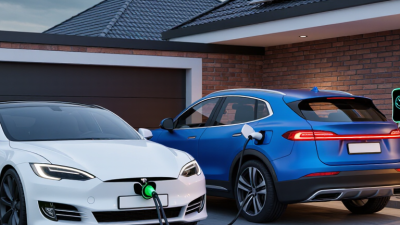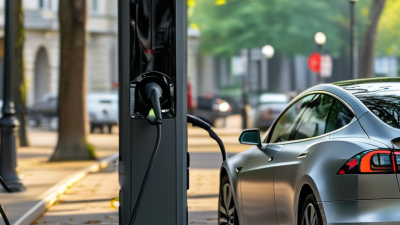
An EV Car Charger is the equipment that transfers electrical energy from a power source into an electric vehicle’s battery. It may look simple, but several systems work together inside it. The charger manages voltage, current, temperature, and communication with the vehicle. It also stops or reduces power when the battery reaches its safe limit.
There are different charging levels. A household socket usually provides slow charging overnight. A dedicated home wallbox delivers more consistent power. Public DC fast chargers can add substantial range within minutes, depending on the vehicle and battery condition. The result is never identical. Battery temperature, charging state, cable quality, and grid capacity all influence the actual speed.
Tom Moloughney, an EV charging specialist and author, often expresses the practical goal this way: “Charging should fit into your life, not interrupt it.” That idea explains why location matters as much as charging speed. A home charger beside a parking space may be more useful than a powerful unit several miles away. A cold battery can also charge slowly, even beside a high-power station. Reality is less tidy than advertisements suggest.
This guide explains what an EV Car Charger does, how AC and DC charging differ, and which equipment suits common driving patterns. It also considers installation, safety features, connector standards, and charging costs. Readers should verify local electrical requirements and vehicle specifications before purchasing equipment. Small details matter. A suitable charger can make electric driving feel routine, while a poorly matched system may create unnecessary waiting and frustration.
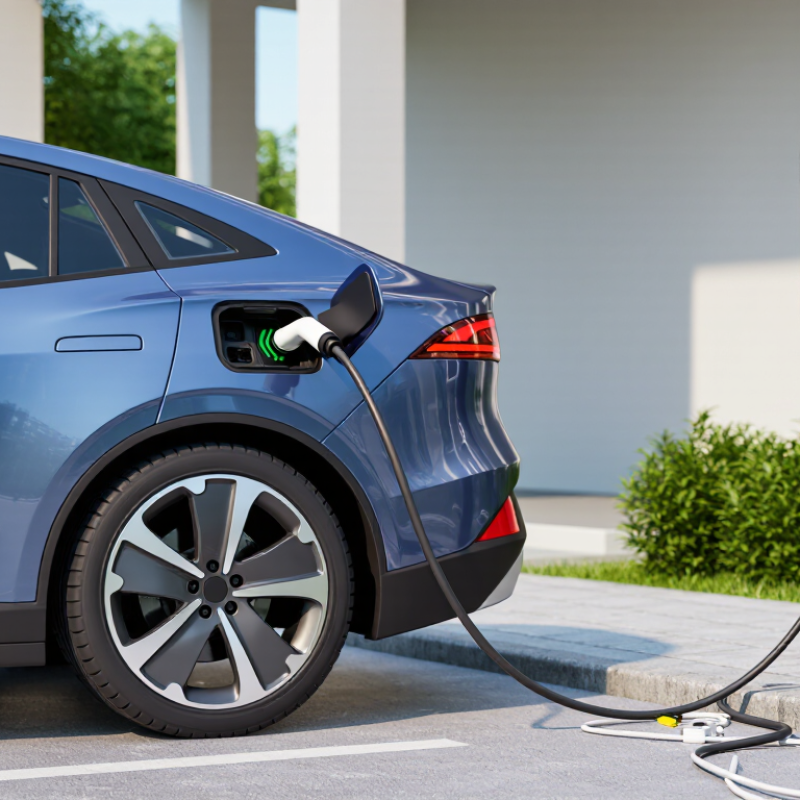
An EV car charger is equipment that safely transfers electricity to an electric vehicle’s battery. It connects the vehicle to a household circuit, public charging point, or dedicated electrical supply. The charger controls voltage, current, and communication between the car and power source. It also stops or reduces power when the battery reaches its limits.
There are two common charging methods.
AC charging sends alternating current to the vehicle, where an onboard charger converts it into usable direct current.
DC fast charging performs this conversion inside the charging equipment, allowing energy to reach the battery more quickly.
Charging speed depends on the vehicle, cable, battery temperature, and available electrical capacity. A powerful charger cannot exceed the car’s accepted rate.
Safety is built into the process.
Sensors check connection quality, grounding, temperature, and unusual current changes.
In daily use, I have noticed that a secure cable connection matters more than many new drivers expect. Small interruptions can stop a session.
The simple definition is useful, but incomplete. An EV charger is not merely a plug. It is a controlled electrical system that manages energy delivery.
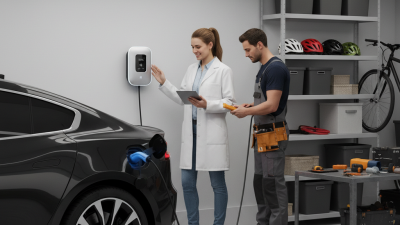
Home installation may also require a qualified electrician, especially when the circuit needs higher capacity. Weather-resistant equipment helps outdoors, though exposed connectors still need sensible handling.
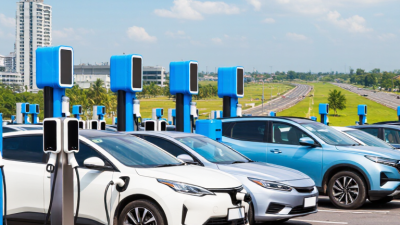
An EV charger, technically called electric vehicle supply equipment, controls electricity between a power source and the vehicle. It does not always charge the battery directly. In many home systems, the charger sends alternating current, or AC, through the charging cable. The vehicle’s onboard charger then converts AC into direct current, or DC, for the battery.
The process begins with communication. The vehicle and charger check connection status, grounding, battery needs, and safe current limits. A control signal tells the charger when power may flow. Safety sensors can stop electricity if they detect excessive heat, leakage, or a damaged connection. This quiet exchange happens before the battery receives meaningful energy.
With direct-current charging, the external unit converts AC into DC itself. It sends regulated DC power straight to the battery, while the vehicle manages voltage and charging speed. Charging usually slows as the battery approaches a high state of charge. That protects battery cells and limits heat. In practice, charging is not perfectly simple. Cable length, temperature, electrical capacity, and battery condition can change the result. I once assumed a higher-rated charger would always charge faster. That assumption was incomplete. The vehicle often sets the real limit.
What Is an EV Car Charger and How Does It Work?
An EV charger supplies electricity to an electric vehicle’s battery. Home chargers usually use alternating current (AC). The vehicle’s onboard charger then converts AC into direct current (DC). DC fast chargers send converted power directly to the battery, reducing charging time.
The main charging levels are Level 1, Level 2, and DC fast charging. Level 1 uses a standard household outlet and adds roughly three to five miles of range per hour. It suits drivers with short commutes. Level 2 needs a dedicated circuit and can add about 20 to 40 miles per hour. It is common at homes, workplaces, and public parking areas. DC fast charging can provide much more energy within minutes, although speed drops as the battery becomes fuller.
Charging speed depends on battery temperature, battery size, vehicle limits, and station output. A powerful charger cannot exceed the vehicle’s accepted rate. I once assumed a higher-rated station would always charge faster. That was not true. Real conditions matter.
Tips
Check the vehicle manual before choosing a home charger. Have a qualified electrician inspect the circuit and installation location. Keep the cable away from standing water and damaged surfaces. Avoid charging at maximum speed every day when slower charging meets your needs. It may reduce unnecessary battery stress. Estimates also vary, so use charging time as a guide, not a promise.
EV chargers transfer electricity to an electric vehicle’s battery. AC chargers use the vehicle’s onboard converter, while DC fast chargers supply direct current to the battery for much faster charging.
Typical rated charging power: Level 1 AC is about 1.4 kW, Level 2 AC is about 7.2 kW, standard DC fast charging is about 50 kW, and high-power DC charging is about 150 kW. Actual power depends on the vehicle, charger, battery state, temperature, and electrical installation.
An EV charger is more than a socket and cable. It is an EVSE, or electric vehicle supply equipment, that manages safe power delivery. The wall unit contains contactors, a control-pilot circuit, temperature sensors, and protection against leakage or overload. When the connector clicks into place, the system checks the vehicle before energizing the cable. Small signals matter.
With AC charging, electricity reaches the vehicle’s onboard charger. That component converts alternating current into battery-ready direct current. DC fast charging works differently. Its rectifier performs the conversion inside the charging cabinet, allowing higher power to reach the battery directly. A communication controller continuously exchanges data with the battery management system. It adjusts voltage, current, and charging speed as the battery temperature changes.
The International Energy Agency reported more than four million public charging points worldwide at the end of 2023. That scale makes reliability more than a design preference. It becomes an infrastructure requirement.
A complete system also includes a power meter, cooling equipment, network communication, and a rugged enclosure. In practical testing, cable stiffness, connector heat, and unstable connectivity can affect the experience. The diagram often looks tidy. Real installations are less perfect. A charger may advertise high output, yet the vehicle can reduce power because of heat, battery state, or grid limits. Understanding these components helps technicians locate faults instead of replacing parts blindly.
What Is an EV Car Charger and How Does It Work?
An EV car charger supplies electricity to the vehicle’s battery. With AC charging, the car’s onboard charger converts household current into usable battery power. DC fast charging sends converted power directly to the battery, allowing much quicker charging. However, charging speed depends on more than the charger’s advertised output.
The vehicle’s maximum charging rate is a key limit. A high-powered charger cannot force a car to accept more electricity than its system allows. Battery temperature also matters. Cold batteries usually charge slowly, while very warm batteries may reduce power to protect their cells. Charging often slows after the battery reaches about 80 percent. This protects long-term battery health. Cable thickness, electrical supply, and charging losses affect efficiency too. A simple wattage label can mislead. I once assumed a stronger charger would always save time, but the vehicle’s limits mattered more.
Tips: Park in a shaded area during hot weather. Precondition the battery before fast charging when possible. Keep the cable clean and fully connected. Check the car’s charging settings, because scheduled charging may delay power delivery. Monitor the charging screen for unusual drops. Small losses are normal, but repeated slow sessions deserve inspection by a qualified technician. Temperature and battery age can change results, so one charging experience does not tell the whole story.
| Dimension | Typical Data or Range | How It Works | Effect on Charging Speed and Efficiency |
|---|---|---|---|
| Definition of an EV charger | Equipment that supplies electrical energy to an electric vehicle. | It connects the vehicle to an AC or DC power source and manages electrical safety, communication, and power delivery. | The charger is only one part of the system; the vehicle battery, onboard charger, charging station, and electrical supply all influence results. |
| AC charging | Approximately 1.4–19.2 kW, depending on the electrical supply and vehicle. | Alternating current is delivered to the vehicle. The onboard charger converts AC into DC before it reaches the battery. | Charging speed is limited by the lower rating of the station, wiring, or onboard charger. |
| DC fast charging | Approximately 50–350 kW; some systems operate at several hundred volts. | The charging equipment converts AC to DC outside the vehicle and sends DC directly to the battery under vehicle-controlled limits. | It can greatly reduce charging time, but power usually decreases as the battery approaches a high state of charge. |
| Low-power household charging | About 1.4–1.9 kW on a typical 120 V, 12–16 A circuit. | The vehicle receives electricity through a portable charging cable connected to a standard outlet. | It is convenient but slow. A large battery may require many hours or overnight charging. |
| Dedicated AC charging | Commonly 3.3–11.5 kW; some installations provide up to approximately 19.2 kW. | A dedicated circuit supplies higher AC power, while the vehicle’s onboard charger controls the actual intake. | This is generally suitable for home or workplace charging and can replenish a typical battery within several hours. |
| Voltage | AC systems commonly use 120–240 V; DC systems may use approximately 200–1,000 V. | Voltage is the electrical potential that pushes current through the charging system. | Higher voltage can deliver more power with less current for the same cable size, provided the vehicle and equipment support it. |
| Current | Residential AC charging commonly ranges from about 12–80 A, depending on the circuit. | Current is the flow of electric charge through the cable and charging equipment. | Charging power is approximately calculated as voltage × current. Circuit capacity and safety limits restrict the maximum current. |
| Charging power | Power is measured in kilowatts (kW). Higher kW generally means faster charging. | Power represents the rate at which energy is transferred to the vehicle. | Actual power may be lower than the station’s advertised maximum because of vehicle limits, temperature, battery state, or grid constraints. |
| Battery capacity | Passenger EV batteries commonly range from approximately 30–120 kWh. | Capacity indicates how much energy the battery can store. | A larger battery generally requires more energy and more time to charge at the same power level. |
| State of charge | Charging is usually fastest at a low or moderate battery level and slower near full. | The battery management system reduces current near a high state of charge to protect battery cells and maintain balance. | Charging from approximately 20% to 80% is often much faster than charging from 80% to 100%. |
| Battery temperature | Very cold or very hot batteries may charge at reduced power. | Thermal management systems heat or cool the battery to keep it within a suitable operating range. | Preconditioning the battery before high-power charging can improve charging speed and reduce stress on the cells. |
| Onboard charger rating | Many vehicles accept approximately 3.3–11.5 kW of AC power; the exact limit varies by vehicle. | The onboard charger converts incoming AC electricity into battery-compatible DC electricity. | A higher-rated AC station cannot make a vehicle charge faster than its onboard charger allows. |
| Charging efficiency | Overall wall-to-battery efficiency is commonly about 80–95%, depending on conditions and charging method. | Some electricity is lost as heat in the cable, power electronics, onboard charger, battery, and thermal-management system. | Lower losses mean lower energy cost and less electricity required to store the same amount of energy. |
| Charging time calculation | Approximate time = energy required (kWh) ÷ charging power (kW). | For example, adding 42 kWh at 7 kW requires about 6 hours under ideal conditions. | Real charging time is longer when conversion losses, power fluctuations, temperature limits, or charging taper are included. |
| Cable and connector condition | Cable resistance, connector cleanliness, length, and rated capacity affect power transfer. | The equipment monitors temperature and electrical conditions and may reduce power if limits are reached. | Damaged, overheated, undersized, or poorly connected cables can reduce efficiency and charging speed. |
| Electrical supply and load management | Available power depends on circuit rating, building capacity, and simultaneous electrical loads. | Smart charging can adjust current to avoid overloading the electrical service. | Shared or constrained circuits may temporarily lower charging power. |
| Vehicle energy consumption | Efficiency varies with vehicle size, aerodynamics, speed, weather, tires, and driving style. | Energy consumption is commonly expressed in kWh per 100 km or miles per kWh. | A more efficient vehicle gains more driving range from the same amount of charged energy. |
| Best charging practice | Use AC charging for routine overnight charging and DC fast charging mainly for longer trips or urgent top-ups. | Charging can be scheduled during lower-demand periods and stopped at a suitable battery level. | Matching the charging method to the use case can reduce energy losses, cost, waiting time, and unnecessary battery stress. |
Note: Values are typical engineering ranges for passenger electric vehicles. Actual specifications vary by vehicle, charging equipment, electrical system, climate, and local regulations.